Thursday, December 13, 2012

Just For Fun: Write a Mad Libs Poem!

I'm always writing down bits and pieces of lines--sometimes not even finishing lines. Such was the case yesterday, and I got the crazy idea to throw together quite a few fragments with blanks that I would come back to later (without seeing the fragments). Basically, I was going back to my elementary school Mad Libs days.

If you want to play, don't scroll to the bottom of the post yet.

Instead, make a list with the following:
  • Plural Noun
  • Singular Noun
  • Present Tense Verb
  • Singular Noun
  • Singular Noun
  • Present Tense Verb
  • Present Tense Verb
  • Plural Noun
  • Plural Noun
  • Present Tense Verb
  • Singular Noun
  • Complete this statement: "I hope ________________________."
That's it.

Go on, make a list without peeking.

*****

Girls Just Wanna Have Mad Libs: Ultimate Box Set

I know, I know. The greatest Mad Libs box set ever! But this is only the tip of the iceberg, because there are Mad Libs books for Star Wars, zombies, Christmas, and more!

*****

Here's the template I created yesterday. Insert your words in the order above. Feel free to title your piece whatever you wish and share in the comments below.

"Poem Title"

I've saturated the ______________
with tales of my _____________.
There's nothing left for me to ______________.
Every __________, every ____________--
they all ____________ to me!

______________ their inner ___________, their
naked ____________. When you __________
your ____________, I hope
__________________________________.

*****

This is how my poem came out:

MADMAN, by Robert Lee Brewer

I've saturated the hooligans
with tales of my television.
There's nothing left for me to swaddle.
Every cape, every pinball machine--
they all flock to me!

Balance their inner treasures, their
naked spectacles. When you fumigate
your elephant, I hope
the accountants kept excellent records.

*****

But wait! Here's how my 9-year-old stepson did:

Madman Jr., by Reese Trendle

I've saturated the zebu
with tales of my kidney.
There's nothing left for me to stab.
Every abolitionist, every light bulb--
they all eat to me!

Jump their inner rats, their
naked knives. When you hit
your gum, I hope
their heads are falling off.

*****

Fun stuff!

Anyway, it's not bad for the middle of the week. If you get stuck with your own poetry, maybe try cutting out words in an already written piece and inserting new nouns, verbs, adjectives, etc.

If nothing else, it provides a new way to look at the same poem.

*****

Connect with me on Twitter, Facebook, and LinkedIn. Plus, sign up for free e-mail updates from this blog in the top right-hand corner of the page.


*****

Check out these other inspiring Not Bob posts:
*****
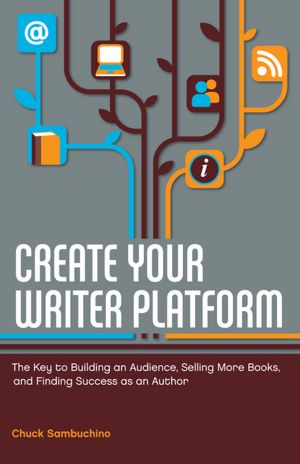


Create Your Writer Platform: The Key to Building an Audience, Selling More Books, and Finding Success as an Author
by Chuck Sambuchino

If you want a book that covers platform in all its variations, this is the title for you. Chuck Sambuchino is the author of humor titles such as How to Survive a Garden Gnome Attack and Red Dog Blue Dog, but he's also behind Guide to Literary Agents and Formatting & Submitting Your Manuscript. In other words, he's been there, done that, and lived to tell about it. Chuck covers social media, blogs, newsletters, public speaking, and more. Click the link above to check it out today.

Tuesday, December 11, 2012

Creativity Trumps Following the Rules (Guest Post From Ernie J. Zelinski)

Here's a guest post from Ernie J. Zelinski, which actually originated as a comment to a previous post about the business of publishing. I don't usually re-purpose comments that way, but I wanted to make sure everyone had a chance to read his thoughts.

Ernie Zelinski, author of The Joy of Not Working and other titles


Fact is social media is not even necessary to promote a book, even though so-called social media experts will be in total denial about this.

I am very successful as a self-published author. I have been in this game since 1989 (a true pioneer and not like a lot of the impostors out there) and making decent money at it ever since my first book was self-published.

Print Sales Are Not Dead


My How to Retire Happy, Wild, and Free will sell about 9,000 copies on Amazon in its print edition this year. In fact, this title will likely sell the most copies this year in its print edition since it was first self-published in 2004. It has already sold a total of 15,000 copies and should reach 17,000 copies by the end of the year. (This proves that people who say "print is dead" are either lying of just plain brain dead.)

Yet my three Kindle titles have only sold 12 copies this month. Why does my How to Retire Happy, Wild, and Free sell so well? Because I don't rely on social media. As marketing guru John Reese (who was the first person ever to make $1-million dollars in one day marketing on the Internet) says, Social media is vastly overrated.

Creativity Trumps Platform


I notice that true best-selling authors like Brendon Burchard, whose The Charge has sold 80,000 copies in its print edition in the last 8 months, don't rely on social media. They have much better and more creative ways to sell books. So do I.

I am amazed at the lack of true creativity and ingenuity in this world. People use the word "creativity" because it sounds nice. They have no sense of the meaning of the word, however. They certainly don't show it in their actions.

Years ago I cut copies of one of my books in half and mailed either the top half or the bottom half of them to corporations with a creative letter that said if they wanted to purchase the book, they had to purchase a minimum of 10. This promotion led to revenues of over $15,000.

I can give several more examples of my own "unique" creative book-marketing tactics that I have used to have my books sell over 750,000 copies worldwide but I won't simply because consultants such as Brendon Burchard and Joe Polish charge up to $3,500 an hour for their consulting and coaching.

Here is a quotation about creativity that also applies to creativity in book marketing:

"What Is Your WOW Factor?
This applies to both the service
that you provide to the world
and the way you market it.
Make it edgy, make it snappy,
and make it punchy.
Even make it raunchy — but
make it different!
Real different!"
— from Life's Secret Handbook

Social Media vs. E-mail


In short, a great author platform does not require any social media at all. You don't heve to be on Facebook, Twitter, or LinkedIn to be more successful than 99.9 perent of authors regardless of what social media and book marketing experts tell you.

As John Reese said, "RSS, Twitter, Facebook, YouTube, BLAH BLAH BLAH. Yes, those methods can generate leads. Yes, those methods can generate some sales. But time and time again little old e-mail marketing kicks their butts — by a long shot"

*****

Ernie J. Zelinski is an international best-selling author, speaker, and prosperity life coach who helps adventurous souls live prosperous and free. Ernie is the author of the international bestsellers The Joy of Not Working (over 250,000 copies sold and published in 17 languages) and How to Retire Happy, Wild, and Free (over 175,000 copies sold and published in 9 languages). Check out Ernie's two quotation websites Sensational Quotes for Smart People and the Retirement Quotes Cafe for more great quotations on a number of topics.

*****

If you have something important you'd like to share on the Not Bob blog, please don't hesitate to contact me by e-mail at robertleebrewer@gmail.com with the subject line: Not Bob Guest Post. Please include an idea or two you have for a guest post, your credentials, and how you think it fits in with this blog. The more specific you can be the better.

*****

Connect with me on Twitter, Facebook, and LinkedIn. Plus, sign up for free e-mail updates from this blog in the top right-hand corner of the page.


*****

Check out these other helpful Not Bob posts:
*****


Create Your Writer Platform: The Key to Building an Audience, Selling More Books, and Finding Success as an Author
by Chuck Sambuchino

If you want a book that covers platform in all its variations, this is the title for you. Chuck Sambuchino is the author of humor titles such as How to Survive a Garden Gnome Attack and Red Dog Blue Dog, but he's also behind Guide to Literary Agents and Formatting & Submitting Your Manuscript. In other words, he's been there, done that, and lived to tell about it. Chuck covers social media, blogs, newsletters, public speaking, and more. Click the link above to check it out today.


Friday, December 7, 2012

What Writers, Editors, and Publishers Should Worry About

This recent article on tablet readers got me thinking about the publishing/media industry and writers in general, especially what we should all be worried about when we're writing our manuscripts, making our print and digital products, and then trying to sell them. My first thoughts were kind of wide-ranging and complicated, but then, it occurred to me that this is really simple stuff: Deliver what your audience wants and needs.

A former F&W Publications VP by the name of David Lewis used to be huge into customer surveys and focus groups, and here's why: He was always wary of us trying to tell customers what they want, instead of the other way around. Even though, many of us were the target audience, he wanted to avoid having two or three decision makers speak for the entire group.

Of course, I know there are times when customers don't know they want something, or they can't imagine something ever existing. For instance, it wasn't long ago that I'd have scoffed at the idea of owning a phone that allowed me to take (and store) images and video while checking e-mail, surfing the Internet, playing video games, and whatever else my phone can do. That said, all content doesn't have to be a smartphone.

Audience Needs
Just because readers prefer to consume their novels, magazines, and how-to books on Kindles, Nooks, etc., it doesn't mean they want every other word to link to some subplot, back story, or e-commerce page.  Often times, readers just want to read.

This doesn't mean the bells and whistles are meaningless, but most people would rather own an ugly car that works over a beautiful car that doesn't start. If you can make something beautiful and interactive, that's great. Just don't compromise the functionality of what your audience really wants: in this case, excellent content.

Discoverability
Another issue brought up in this article was how products are discovered in the storefronts. Hearst President David Carey basically says that products have to land in the upper carousel of the storefront to sell well. I'm sure most sales on Amazon have to rank well too. So, does that mean all publishers and writers are held at the mercy of Apple, Amazon, and other booksellers?

Umm, it shouldn't. This merely underscores how important it is for publishers and writers to have a direct line to their audience. It underscores the importance of an author platform. Publishers and writers can't just call it a day after a book gets in the bookstores; they have to shine a spotlight on their creations.

While fulfilling an audience's needs should always be priority one, working on discoverability (and yes, I know it's not a real word) is priority one-A.

Connection
As I mentioned above, discoverability should be a close second priority for writers, editors, and publishers--if they want to sell books. But it's one thing to talk about promotion, and anyone can just start throwing up links like crazy after a book is published. That doesn't mean anyone is going to pay attention. No, what writers, editors, and publishers need is to create platforms and make meaningful connections with their target audience and the influencers of their target audience.

This means you connect with bloggers, program directors, and editors of magazines and websites related to your writing and that in turn connect with your target audience. These are the gatekeepers to your target audience (your potential readers and book buyers).

Combine
For writers, editors, and publishers to find the most success in the future, it is imperative that they work to combine these three elements. They need to figure out what their audience needs and then deliver it in a way that their target audience knows that it exists and that it is exactly what they want. If the content really is great, this is the recipe that creates bestselling products and earns writers, editors, and publishers adoring fans, which ultimately leads to more fun projects in the future.

*****

Connect with me on Twitter, Facebook, and LinkedIn. Plus, sign up for free e-mail updates from this blog in the top right-hand corner of the page.


*****

Check out these other helpful Not Bob posts:
*****

And if you want a way to make a super investment in your author platform, check out the latest offering from Writer's Digest: Author Platform Consultations. There are three different levels--from a basic package (that is anything but basic) to an 8-week program that involves 30-minute consultations each week. Click here to learn more.

Monday, November 12, 2012

Develop a Slogan to Help Your Author Platform

Over at Ad Age, Al Ries wrote a great piece on slogans in relation to political campaigns. Whether you voted for Obama or Romney, Ries shines the light on who had the better slogan--and why. (Click here to read the full article.)

The two main nuggets I got out of the article were:
  1. A good slogan cuts both ways. That is, a good slogan builds up an identity (person, company, etc.) while also defining how you're different than the competition. Using Obama's "Forward" slogan as the example, it implies that Obama wants to move forward while his competition wants to go backward. Politics aside (and whether you agree or disagree), that's what the slogan communicates.
  2. A good slogan communicates value. If you write cookbooks, your slogan should NOT be: Jane Doe, Cookbook Author. A more powerful slogan might be: Jane Doe, Helping the World Cook Better. Instead of Joe Smith, Thriller Author, try Joe Smith, Keeping Readers on the Edge of Their Seat.
Robert Lee Brewer, Helping Writers Succeed


Why Do Slogans Matter?


Writers have so much to worry about that I totally understand if they're wondering, "Why the heck should I care about slogans? Aren't those just for companies?"

Those are fair questions, but here's the thing: Once writers hang their shingles as freelance writers, that makes them businesses. Maybe just one employee. Maybe not super successful...just yet. But a business nonetheless. Still, why does a slogan matter?

For one, a slogan defines who writers are to their target audience--to literary agents, editors, book buyers, and ultimately readers. That's pretty important stuff.

Second, a slogan defines who writers are to themselves. It might seem like common sense, but most writers can't define themselves--especially in a way that explains their value--in fewer than 10 words. That's why developing a slogan is a super important exercise.

Incorporate Into Your Author Platform


Once you have a slogan that communicates value and cuts both ways, begin incorporating it into your platform building.
  • Use it--or something very similar--as the tagline on your blog and/or website.
  • Include it in the About Me sections of your social media profiles.
  • Put it on your business cards.
  • Include it in your e-mail signature.
  • Work the slogan into any other messaging you can, whether an e-newsletter or print stationery.

Use it and use it some more. Remember: Consistency is key in brand building, and that's exactly what an author platform: It's building your brand as an author. Now, get to work on your slogan.
 
*****

Connect with me on Twitter, Facebook, and LinkedIn. Plus, sign up for free e-mail updates from this blog in the top right-hand corner of the page.


*****

Check out these other helpful Not Bob posts:
*****

And if you want a way to improve make a super investment in your author platform, check out the latest offering from Writer's Digest: Author Platform Consultations. There are three different levels--from a basic package (that is anything but basic) to an 8-week program that involves 30-minute consultations each week. Click here to learn more.

Wednesday, November 7, 2012

2012 November PAD Chapbook Challenge!

There are things I love and things I detest about November. One thing I detest is Daylight Savings Time. Blech! However, something I love (in addition to Thanksgiving) is the November PAD (Poem-A-Day) Chapbook Challenge that's run on my Poetic Asides blog.

Here's how it works: Each day of November, there is a new prompt posted. Each day, poets from around the world respond to that prompt with their poems. At the end of November, poets should have 30+ poems written which they can turn into a 10-20 chapbook manuscript to submit to me by early January.

The challenge is meant to be fun and productive. Anyway, I thought I'd link to the prompts here to make it easy for Not Bob readers to play along and get caught up (if they want to break a line or two).

Here are the November 2012 poetry prompts:


The prompts will fill in throughout the month. Click on the links above to view the full explanation of the prompt, read my own attempt at the prompt, and read plenty of examples by other poets.

No matter the challenge you're taking on in November (if you're taking one on), please have an excellent time doing so.

*****

By the way, if you're into challenges (and haven't done so yet), you might be interested in taking on my 30-day Platform Building Challenge. It's free, easy, and has been very helpful for scores of writers already. Click: How to Build (or Improve) Your Writer Platform in 30 Days.

*****

Also, I don't think I've mentioned it on here yet, but I was called out in the November issue of O, The Oprah Magazine for my Poetic Asides blog. In fact, a direct quote: "I have a poet crush on Robert Lee Brewer." Now that's something cool! Click here to check out the piece, which includes three other important poetry resources.

*****

Connect with me on Twitter, Facebook, and LinkedIn. Plus, sign up for free e-mail updates from this blog in the top right-hand corner of the page.


*****

Check out these other helpful Not Bob posts:
*****

And if you want a way to improve make a super investment in your author platform, check out the latest offering from Writer's Digest: Author Platform Consultations. There are three different levels--from a basic package (that is anything but basic) to an 8-week program that involves 30-minute consultations each week. Click here to learn more.

Wednesday, October 24, 2012

3 Reasons Why SEO Matters: Improve Search Engine Rankings

This is why SEO matters: If you want to improve search engine rankings, there are two ways to make that happen, and both techniques have to work together. First, you have to write amazing content. Second, you have to employ sound keyword strategy.

I spent last weekend in Hollywood, California. It was a great trip for two reasons:
  1. I was able to take a bunch of goofy tourist photos.
  2. I was afforded the opportunity to help people understand the importance of SEO.
View from hotel room included the HOLLYWOOD sign.

3 Reasons Why SEO Matters


Here's the brick wall I usually hit when explaining the importance of SEO. Most writers are allergic to numbers and statistics. Some writers are completely against structure (these writers often fight against the idea of using outlines).

However, if they're going to get the most bang for their buck online, writers (and all professionals) need to optimize their websites for search engine. Here's why:
  1. SEO leads to discover-ability. Most people who need to know the answer to something now go online to find the answers. Sites that aren't optimized for search engines will not display in the search results. If your site isn't on the first page of results, it's pretty much invisible. In fact, most sites that aren't in the first 3-5 spots on a search page will receive fewer than 5% of all clicks on a given search.
  2. SEO leads to higher traffic. A common method for measuring success on blogs and websites is to look at traffic. That makes a lot of sense. One good method for increasing traffic is to post a lot of new content, but it takes a lot of effort for each new page or post. Any even better method is to post content that receives as much (or more) traffic on day 365 as the day it was first posted. This can be accomplished with great SEO.
  3. SEO leads to improved content. Many writers point to content as the reason they object to learning SEO. They argue that targeting keywords leads to stilted language. Let me agree for a moment: Yes, it can. In such cases, keyword-loaded posts with stilted language do not perform well in search engine rankings. It takes a combination of great keywords and great content to consistently rank on page one.

Improve Search Engine Rankings


I'm only writing this post because I've seen the power of SEO first hand. I've spent the past two years experimenting with content on this blog, including increasing posts, linking to social media, and optimizing for search engines. Some experiments have worked; others have failed; and I try to share everything with my awesome readers.

As many long-time Not Bob readers know, I was posting nearly every day through the first five months of 2012. I'd driven traffic to my blog to new levels through many strategies mentioned in my 25 Ways to Increase Blog Traffic post. Then, life got in the way, and I was able to run a different type of experiment--a very passive experiment. I was able to see what my Not Bob traffic would be like without new content.

This is only my 2nd post since August 7 and 10th since May 31. In fact, I didn't even post in the month of September. Traffic on my blog actually increased during the months of June through September (October is still in progress) by 44.8% in 2012 over 2011. In the month of September (in which I didn't make a single post), my traffic increased 41.4%.

I'm not sharing these stats to make your eyes gloss over or to boast. I want to emphasize that the traffic to my blog in my absence was not due to new content. Instead, it was mostly through new readers finding me while searching for answers online. My combination of solid content and great keywords helped increase my traffic while I've been away.

Use SEO to Improve Your Platform


Whether you're a writer or business owner (and really, freelancer writers are business owners), search engine rankings are essential to your success online. Lucky for you, I've developed a 30-day challenge for improving your online platform. It's completely free and--from the testimonials I've received--completely effective in jump starting your process. 

Over the 30-day plan, I cover many tasks, including better SEO. I encourage you to start taking the challenge today (or this weekend) if you haven't yet.

*****

Connect with me on Twitter, Facebook, and LinkedIn. Plus, sign up for free e-mail updates from this blog in the top right-hand corner of the page.


*****

Check out these other helpful Not Bob posts:
*****

And if you want a way to improve make a super investment in your author platform, check out the latest offering from Writer's Digest: Author Platform Consultations. There are three different levels--from a basic package (that is anything but basic) to an 8-week program that involves 30-minute consultations each week. Click here to learn more.

Thursday, October 18, 2012

What I've Been Up To

If you only know me through this Not Bob blog, then you've probably been wondering what the heck happened to me. The truth is that I've been busy with all the other not-"Not Bob" stuff I have in my life. This blog has become so successful that I haven't had to worry too much about traffic slumping (even as I've focused on other projects).

That said, I haven't just been sitting around doing nothing the past few months. In fact, I'm hopping on a plane tomorrow morning to work the Writer's Digest Conference West event in Hollywood, California. I'll be speaking on a panel (Hardcore Author Marketing) on Saturday. If you can attend, please stop by and introduce yourself.

At an Ohio pumpkin farm with two of my boys.

Last month, I worked as a member of the staff for Writing Away Retreats, which is an amazing event for writers put on my Cicily Janus. Cicily assembles a wonderful staff (agents, editors, authors) and brings them together with what feels like a hand-selected group of attendees. If you ever have the opportunity to attend one of these events, I highly recommend it.

As a poet, I've had a few poems accepted recently by MiPOesias and The Pedestal Magazine. Since I have only made a few submissions all year, I consider this an incredible achievement. A lot of my poetic energy has been focused on putting together a full-length poetry manuscript, which I'm hoping to start submitting in November.

As a blogger, I've been busy too (though, yes, I know, not here):
I've been working so much in WordPress recently that it feels weird to have such a clean admin experience with Blogger now. (It's kinda nice.)

If you're interested in blogging, check out this excerpt of a tutorial I recorded for Writer's Digest sharing my 50 Ways to Increase Your Blog Traffic. It's sort of like my 25 Ways to Increase Your Blog Traffic post--but it's twice as long and comes with the authoritative sound of my voice.

Hmmm... there are other things I've been doing, but this post is already so terribly long that I'd recommend keeping up with me in small chunks. For instance, you could follow me on Twitter @robertleebrewer or find me on Facebook as Robert Lee Brewer. If you prefer, I'm also on Google+ as Robert Brewer.

I'm not going to make any promises about increasing my blog frequency here. It's on my to-do list, but the more important list is always my to-done list (as in this post is nearly to-done). If you want to stay on top of future posts that will help with writing, blogging, publishing, parenting, or whatever else I decide to address, then sign up for e-mail updates over on the right.

In the meantime, check out the following Not Bob posts from the archive: