Friday, March 1, 2013

Ignoring One's Calling (Part 1)

One of my favorite things for 2012 was the life-changing moments series of guest posts in which readers shared a moment that changed their lives--and how even in the seemingly worst situations they found a lesson that helped them move forward. I'm excited to share an entire series of moments from Amanda M. Socci.

Amanda is a freelance writer and blogger from Alexandria, Virginia, who writes posts on her personal blog (http://creativeideagal.com), blogs entries on a book on faith which she is blogging on a local news service (http://mountvernon.patch.com - search for "Socci"), and searching for freelance writing assignments. Amanda enjoys taking unusual viewpoints in her nonfiction writing, incorporating meaningful analysis with hints of humor, along with references to pop culture. A diehard researcher and natural observer of life, Amanda writes about diverse topics, hoping to entertain her readers through unique perspectives on life.

-->
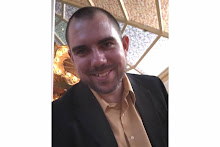
Amanda M. Socci

Did you ever experience a time in your life when you felt that you were meant to be doing something and ended up ignoring that feeling, only to let that feeling get stronger?

I did.  I felt a calling to write early on in my life but chose to ignore that calling several times.  Each time I felt the calling, the urge to write got stronger and it became harder to ignore.  One day, the calling shoved me up against a brick wall like a violent wake-up call.  I finally answered my calling.

After 30 years of messing around in dead-end career choices, I finally got down to business and unflinchingly declared myself a writer at the ripe age of 40.  What follows is a chronological sequence of events leading up to the pivotal moment where my life changed. These are the moments where I ignored the calling in my life, which, as I have come to realize, is writing.  This is my story.

Age 10: Reading lots of Books
My writing career began surreptitiously with a foundation in reading.  Just a babe at 10 years old, I borrowed lots of books from our library, loving getting lost in the teenybopper romance stories.  I learned about an author who was published at the age of 13 and became obsessed with being a published author.  From that moment, I put an unnecessary amount of pressure on myself to be published by the age of 13.

As much as I wanted to write, the pressure of copying someone else’s success of publishing a perfectly written book by the age of 13 was more than I could handle.  Too much planning in the brain led to indecision and no real writing. 

This would be the first time in my life that I ignored my calling.

Age 13: Being Different is Hard
When I was 13, I was your typical 8th grader from New Jersey, sporting big hair and neon clothes, ogling over the hotties in Duran Duran.  As typical as I appeared to the outside world, I was not typical on the inside.  I was depressed and had thoughts of suicide because I was so different than everyone else and not accepted for who I was. 

I became an ostracized square peg living among attractive white people.  Back in the 1980s, my hometown in rural New Jersey was 95% white, with only 5% minority, including African Americans and us, Latinos.  My parents and grandparents were the ones born in Colombia, South America while two siblings and I were born in the United States.  That didn’t stop the cruel illegal alien and immigrant jokes from invading our breathing space.

I went to a Catholic school and dutifully learned my Catholic teachings, practically to a fault. I excelled at school when I failed at relationships.  I buried my nose in the schoolbooks and in reading.  Out of pain came a love for fiction.  My own invented fiction.

Born Amanda M. Castro, I took on a pen name “Chantal Pearcy” as a derivative of my name in French class “Chantal” and the last name of my favorite singer “Stephen Pearcy” from the heavy metal rock band, RATT.  Once I took up that pen name, everything was in my power. 

I was no longer the helpless Amanda who cried because she was teased, taunted, and humiliated for being a Latina, for having acne, for liking the color red, or for any other ridiculous reason.  I became the dark and moody Penny Marshall, adeptly directing my characters on paper, killing off some characters, resurrecting others.

I also wrote letters to God, asking him why he was being so unfair to me.  I ended up writing a lot.  I loved the satisfying experience of writing and creating. I relished every second of it.   

Age 15: Things Start to Turn Around
By age 15, I was a sophomore in high school.  With my life still in turmoil over personal issues, I dove headfirst into my schoolwork as well as my writing, which gave me a cool sword of smarts and writing chops.  I created a novella which I was very proud of.  I submitted a draft to my favorite English teacher, who promptly dismissed it with a polite “thank you” and a few grammatical fixes, but without any substantive feedback. 

My junior year in high school became a turning point in my writing career, dare I say, prophetic.  I read Bram Stoker’s Dracula, which I thought was exceptional, and had a homework assignment to write an essay describing the symbolism in Dracula.  Using my own analysis and creativity, I wrote some pretty decent descriptions of the characters with an impressive masthead that resembled what you’d see in a playbill.

After I turned in my assignment, my English teacher demanded to know how I came up with my description of the main characters.  I calmly explained that I invented everything out of my own imagination. Would you believe that I was borderline accused of plagiarism?  Strangely, I didn’t mind the controversy and silently smirked at myself, happy that my writing could cause such a ruckus in small-town, New Jersey.

Such a strong reaction to my writing meant I was on to something.  Was God calling me to write for a living?  I was only 16 years old when I felt the calling so vividly. Was writing the thing I was meant to do for the rest of my life?

My parents had always been supportive of my eccentricities, but they weren’t too keen on my getting into writing as a profession because, as my father rationalized, in order to be a writer, I would have to write every day.  That wasn’t something I was willing to commit to because my writing happened only when inspired.  If I wasn’t inspired, I could not bring myself to write.  Let’s just say that by convincing myself that I couldn’t write as a result of a perceived lack of inspiration, I succeeded and was not able to write. 

Since I refused to write every day, my junior year in high school would be the second time in my life that I ignored my calling.

Age 19: Recycling Moves into my Heart
In 1991, I was an impressionable 19 year-old who had been shielded from many life experiences and was anything but street smart.  I headed to the progressive, forward-thinking college of Rutgers University in New Brunswick, New Jersey, where I first fell in love with the concept of recycling.  Before I even knew who Ed Begley, Jr. was, I became him, trying to convince my professors to recycle, with very little time or interest in writing professionally. 

I took several writing-centered classes but refused to get an English minor degree because I couldn’t stomach Shakespeare.  Instead, I shifted gears altogether and became fascinated with crime and the psychology behind the crime.  I took so many classes supporting the science of crimes, that I changed my major and graduated proudly with a Bachelor of Science degree in the administration of justice.  I was headed to law school.

How does one go from being depressed, to writing as an outlet for dealing with emotions, to a sudden interest in crimes en route to law school?  Easy.  Some innocent comments from my parents made the difference.   My parents prodded me to try my hand at law because they said I was good at starting debates with my brothers and always looking to get the last word in.

Age 23: Law School Beckons
In late August 1995, I received rejections from all the law schools that I applied to. I was stuck and didn’t know what to do.  After some more prodding from my father and a 10-page persuasive, heart-written, detailed letter made its way to the dean’s desk, I earned a coveted spot at Howard University School of Law in Washington, D.C., despite having bombed the LSATs and dropped my grades while in college.

Being in law school certainly made me smarter, but it also kicked me in the butt and made me sweat.  I will never forget how the first week of law school had me reading law cases, like complicated short stories for geniuses, and spending just about eight hours of intensive studying to understand them. 

The next three years had me writing legal briefs and legal research papers, which I loved, because I was reintroduced to the mechanics of writing while at law school.  But this writing was different.  I couldn’t just invent what I wanted.  I had to support every one of my statements with thorough legal research of past legal cases (legal precedent) that tackled the same subject matter of the original question or problem.  It was excruciatingly complex and not fun at all.

Nonetheless, I was thoroughly excited to use my new legal research and writing skills to produce strong writing once again.  By this time, my interests were now in consumer affairs, and I seemed to be enthralled with the bureaucracy of business, all while proudly writing about it.

After graduating from law school, I got married and was very happy spiritually, but physically, I was burned out.  I took some time off from the intensity of law school and turned to couponing before the concept of extreme couponing became commonplace. 

I was the original extreme couponer, hoarding multiple coupon inserts, hitting our local supermarkets and getting tons of free stuff.  A far cry from burning the midnight oil and straining my eyesight in reading hundreds of legal cases, I finally felt free again to be myself, but did nothing professionally.

Age 26: Answering the Call with a Huge Writing Project
After doing so much couponing, I became inspired.  Why not write about my good deals in a way that is funny, interesting, and informative?  The inspiration took over me and rained down a million funky thoughts, eventually turning them into “Consumers Everywhere,” a national publication for consumers that was quirky, cute, and promoted unusual themes in each issue. 

Although no one ever regarded “Consumers Everywhere” as special, I absolutely loved it because I did it all by myself without any help.  Plus, it marks the first time in my life that I felt that familiar calling and actually did something about it.

Despite the calling, however, reality set in and in my new marriage, I knew I had to do my part to help my husband bring home the bacon.  I gave up writing and looked for full-time work, in any field, so long as it paid the bills.  Complete strangers admonished me for not getting into the legal field after having graduated law school.  Little did they know how many years I would try to get into the legal field with no success.  That made me 0 for 2. No career in law, no career in writing.


...to be continued.

*****

The conclusion of this story will post next Friday.

In the meantime, feel free to check out some other Life-Changing Moments stories from 2012:


Thursday, February 14, 2013

Northern Colorado Writers Conference

I just received my itinerary from Southwest Airlines--my itinerary to Denver, Colorado (my second trip to Denver in less than 8 months). From Denver, I'll be heading to Fort Collins to speak at the 8th annual Northern Colorado Writers Conference. I'm super excited...for a few reasons:
Andrew McCarthy, guy I thought was cool
(okay, still think he's pretty cool)
  1. Andrew McCarthy is the keynote speaker. Yes, that Andrew McCarthy--the guy from Mannequin, Weekend at Bernies, and Pretty in Pink. Actor, director, and award-winning travel writer. I'm psyched to see one of my childhood idols--yes, I idolized a guy who chased around an inanimate girlfriend and worked for a deceased boss; what can I say? It was the 80s!
  2. Fort Collins is an F+W Media hub. Why is that important? Because I've been employed by F+W Media since the days when they were known as F&W Publishing (remember when media companies were called publishing companies?), but I've never been to our Fort Collins hub. Who knows if I'll have time to meet up with any of my F+W homies, but it'll be cool to be near them nonetheless.
  3. Colorado rocks! And it's not just because of the Rockies. Okay, mostly it's because of the mountains--the last time I visited Colorado I ventured with Tammy up to Breckenridge, which was great (after I adjusted to the altitude anyway). Despite it's needlessly confusing airport, I had a blast the last time I visited Colorado.
  4. Writers conferences are fun. They just are. It's always inspiring to meet other writers and publishing professionals. Ideas always grow in these settings--as do personal connections and future opportunities. That' right, I'm advocating that all writers get out to events to help their careers--in both creative and professional ways.
  5. I'm speaking. Okay, I have a love-hate relationship with speaking in front of groups. I love it, but I always expect the audience to pelt me with rotten fruits and veggies (because, you know, they always carry them to live events--just in case). My involvement includes presentations on blogging and finding freelance work. Plus, I get to lead a poetry roundtable with an exclusive group of like 10 or so writers (see if you can get in).
The whole event should be busy and a lot of fun. I have a feeling the time will pass faster than I expect, because that's what happens when you're having fun, right?

Anyway, here's a little more information about the conference that was slipped to me by Kerrie Flanagan (my point person for the event):

The 8th annual Northern Colorado Writers Conference, April 26-27th at the Fort Collins Hilton, is the premiere writer’s conference in region. This year features keynote speaker, actor and director, Andrew McCarthy. From Pretty in Pink to National Geographic Traveler, McCarthy will share how he added award-winning travel writer and author to his list of accomplishments. His recently released memoir, The Longest Way Home, has been well received by critiques.

Also being featured at the event will be the high school Poetry Out Loud state champion who will recite poetry to the attendees Friday evening. During the course of the event, over 25 sessions will be offered by a carefully selected faculty that includes literary agents, editors, freelance writers, publishers and novelists.

The conference was started back in 2006 as a way for writers of all levels and genres to get together  to learn more about the craft, connect with industry professionals and be in the company of other writers for two days. Eight years later the event is still going strong and draws in people from all over the country.

For more information about the conference, visit www.NorthernColoradoWriters.com.

*****

Connect with me on Twitter, Facebook, and LinkedIn. Plus, sign up for free e-mail updates from this blog in the top right-hand corner of the page.


*****

Check out these other Not Bob posts for writers:


Friday, February 1, 2013

Best Blogs for Writers to Read in 2013

Once again, it's that time of year. Every February, I reveal my personal list of the best blogs for writers to read. These are personal faves, so I won't be offended if you know a great blog I didn't list. Please share it in the comments below, and I will review it for next year's list.

By the way, this year's list offers more than 50 blogs. In 2011, I listed 31 wonderful blogs for writers; in 2012, I listed 39 great blogs for writers; this year, the final count is 55. Who knows what the final number will be next year? As always, I'm human about putting this list together, so don't take a snub as a personal attack.

Brian Klems, double blogger at WritersDigest.com


Writer's Digest Blogs
As a Senior Content Editor for the Writer's Digest Writing Community, I'm rather partial to the blogs on the WritersDigest.com site. My poetry blog (below) has a home there--as does the best blog covering literary agents anywhere.
**********

Learn How to Start (or Improve) Your Blog!

E-media guru Dan Blank of We Grow Media leads this 4-week Blogging 101 course. In addition to covering how to set up a blog, bloggers will learn how to create an editorial calendar to keep content on track, how to interact with readers and build a sense of community, what search engine optimization is and how to use it to your advantage, and more.

Click to continue.

**********

My All-Star Blogs for Writers
These are the best of the best as far as I'm concerned by single bloggers (tag-teams have their own list below). Their content is updated frequently, and it's of high value. Everyone, regardless of genre, should be able to learn something on these blogs.
Not Bob, Jane Friedman, Porter Anderson, Christina Katz


Tag-Team Blogs for Writers
These blogs could just as well be on the All-Star list, but they're mostly assembled through a group effort. Nothing wrong with that. In fact, some of these are the best at covering their specific areas.
Sandra Beasley, who digs poetry

Blogs That Rock for Writers
These blogs are just as cool as the others listed above, but they do it in their own unique ways. In fact, I'd say many of these blogs kind of have their own rocking attitude that the others above don't. If you can check them out regularly, you won't be disappointed.
*****

Connect with me on Twitter, Facebook, and LinkedIn. Plus, sign up for free e-mail updates from this blog in the top right-hand corner of the page.


*****

Check out these other Not Bob posts for writers:

Tuesday, January 22, 2013

Richard Blanco, James Franco, Inauguration Poems & Poetry

Yesterday, we experienced another Presidential inauguration and poetry was surprisingly (in often surprising ways) a topic of conversation again, because of two central characters: Richard Blanco and James Franco.

Richard Blanco Inauguration Poem


Before getting too carried away in this post, here's a link to Richard Blanco's inauguration poem "One Today"--both text and video of him reading. For an occasional poem written for a Presidential inauguration (with only 2-3 weeks notice), I think it's pretty solid--even beautiful in some spots. The inauguration committee did a good job in selecting Blanco.

Blanco was mostly praised by my connections on Facebook and Twitter, but Mashable has a sort of sad (and funny at the same time) piece that shares tweeps who were less than impressed by Blanco's lack of rhymes. And I'll get back to this, but there was another poetry-related inauguration story, and that is the...


James Franco Inauguration Poem


Before Blanco took center stage, another poet (and I'm seriously not using this term with any sarcasm) was lighting up my social media feeds: James Franco. Apparently, he was commissioned by Yahoo! News to write an inauguration poem (view it here).

It doesn't take an engineer to realize the poem is horrible. There's even a poem about the Franco poem already. But Franco was already making waves in the poetry community because of a book that's coming out from Graywolf Press.

Poets were already Franco-hating before the ill-fated inauguration poem; now, most are likely beside themselves. For me, I actually feel kind of sorry for Franco, because he has a platform and (I don't know this for certain) maybe a lack of criticism from those closest to him (because he has a platform).

If the poems in Franco's collection are anything like his inauguration poem, then it's pretty easy to speculate that his book was accepted off the merits of saleability--not artistic merit. And that may be cheating both readers and Franco.

What makes me feel sorry for Franco is not that he has a giant platform to sell his books, rather it's that he's making all his mistakes in front of that platform--possibly being told that he's writing great stuff. Every poet has written horrible poetry (I have boxes full of it), but most get to hide that stuff away from the world.

Back to Blanco


Meanwhile, the whole perception of poetry as something that needs to rhyme that's a-whole-nother problem that's just as hard to solve as how to help Franco develop as a poet. I remember my worldview of poetry exploded when I went to college. I don't know if I thought it all had to rhyme (because we studied Whitman), but I had no idea what poets younger than Robert Frost were doing.

Plus, as a friend shared on Facebook, most poetry on the high school level is dissected (like a frog or pig in science class), not enjoyed. So it's hard for me to go hating on people who don't understand poetry, but it's also hard to figure out how to improve the perception that a poet must were a beret or snap his/her fingers at the conclusion of each poem. Years ago, I had a cousin ask if I was gay when I shared that I was a poet.

So what is there to do but to enjoy the Richard Blancos of the world and try to encourage and help the James Francos of the world? Meanwhile, we can try to help our friends and family--children and adults--learn to appreciate what good contemporary poetry is and can be.

(And yes, I admit it is very hard to not write a limerick or sonnet that rhymes Blanco with Franco. Maybe I'll get to that later today--or you can.)

*****

Connect with me on Twitter, Facebook, and LinkedIn. Plus, sign up for free e-mail updates from this blog in the top right-hand corner of the page.


*****

Check out some other recent Not Bob posts:


Friday, January 18, 2013

3 Ways to Make Your Own Luck

The latest issue of Sprout magazine features an interview with yours truly. If you're not familiar with Sprout, it's an inspired and inspiring online magazine fun by Amanda Fall. Go check it out. Anyway, the first question Amanda asked was tied into how I went from unpaid intern to well-connected editor.

Confession time: I believe a lot of my success over the years has come from "lucky breaks." Even my unpaid internship position with the Writer's Digest Writing Community, it was a lucky break. Of course, I'm willing to take credit for hard work and taking advantage of opportunities, but many of my best opportunities found me, not the other way around. How did that happen?

Serendipity can play into making your own luck.


Three Keys to Make Your Own Luck


I've given this topic a lot of thought over the years, and then decided to tackle this subject after reading Nick Usborne's posts on catching lucky breaks around the end of 2012. Here are my three keys to how I make my own luck:
  • Experiment
  • Engage
  • Share
Three simple words that I'll explain more below, but these actions are responsible for all my luck.

Experiment


If I wanted to use more than one word, I might also say this key is "taking chances." For instance, I was exclusively an expert on publishing--as the editor of Writer's Market--before I started building a reputation as a poet.

My appearance at the Red Clay Writers Conference...


I still remember the meeting in which Writer's Digest magazine editors were trying to expand their site by offering editorial blogs. While many editors opted out of this "extra responsibility," I immediately saw an opportunity to share my rekindled love of poetry with the WritersDigest.com community. So I pitched Poetic Asides, and here's the funny part...

...my reputation was so entrenched as a publishing expert for fiction and nonfiction freelancers that I received some push back on the idea. In fact, the poetry blog was only accepted after I recruited then Poet's Market editor Nancy Breen as my co-blogger (quick aside: I was already friends with Nancy and lucky to have her as a resource in the beginning). The rest of my poetry luck is history.

I went on to be named Poet Laureate of the Blogosphere in 2010--hosting super successful poem-a-day challenges in April and November. I've been hosted as a featured poet at several events around the country, including the Austin International Poetry Festival (AIPF) and Poetry Hickory. My debut full-length collection, Solving the World's Problems, is due out from Press 53 on September 1.

Of course, there's more to that luck, which I'll get into below, but none of it would've happened if I didn't experiment by pitching and launching the Poetic Asides blog. Before that, I was receiving speaking opportunities as a publishing expert by absolutely zero opportunities in the poetry world.

...led to me being invited to the Blue Ridge Writers Conference...


Engage


Speaking of the Poetic Asides blog and the April PAD Challenge, the idea was simple enough: I would offer a prompt each day in April (along with my own attempt at the prompt) and ask others to write a poem too. I hoped to get some participation, but I really didn't know what to expect and even worried that only one or two people might show. But the poems came.

And came. And came. That first post is still up on the site, and there were nearly 300 comments. But it didn't end there. The response was so overwhelming through the whole month that I started sharing poetry prompts on Wednesdays and created a November poem-a-day challenge dedicated to crafting chapbooks of poems.

These are experiments that worked out, but I also truly feel they are an example of engagement. For instance, one way I've built traffic on My Name Is Not Bob is through challenges and shining the light on other bloggers and tweeps. I didn't ask for or expect anything in return, I just felt that engaging with others is the right way to do things.

This engagement has led to "lucky" opportunities, including invitations to read at poetry festivals and events. Those speaking opportunities led to face-to-face engagement opportunities that led to more speaking opportunities. For instance, I would've never been invited to Houston Poetry Fest "Out of Bounds" if I had not met Mary Margaret Carlisle at AIPF. My invitation to speak at the Blue Ridge Writers Conference came from speaking at the Red Clay Writers Conference and it (the BRWC) led to an opportunity to speak at Poetry Hickory.

...which opened up an opportunity to speak at Poetry Hickory.


I have so many similar examples, both online and in person, of engagement with others leading to lucky breaks and opportunities. These speaking opportunities weren't pursued by me; they were offered, because I was engaging with people--and they saw the opportunity for me to share my passion and experiences with their audience.

Share


There are many ways that sharing can lead to "lucky breaks." I mentioned Mary Margaret Carlisle above, and I met her at the Austin International Poetry Festival. She was a fellow featured poet, and we did a book swap--I'd recently self-published a limited edition chapbook of poems that have since sold out.

Without realizing it, my act of sharing set the wheels in motion for me to be invited as the feature for her Houston Poetry Fest "Out of Bounds" event--an event that raised money for me to come out, stay the night in Webster, sell some more chapbooks, and read my poetry before an engaged audience. I didn't expect anything to happen, but it did. And I've had other examples of this happening--without expectation on my part.

With Mary Margaret Carlisle at Austin International Poetry Festival.


Share your words, your thoughts, your ideas, and good things will happen. Don't spend all your time trying to trick people or get something tangible out of them. Trust that good works lead to good opportunities.

As one last example, one key reason the April PAD Challenge has been so successful from day one is that I shared my own example poem with the prompt. It's a way of showing that I'm in it with everyone else--writing horrible first drafts that more often than not never amount to anything. Sharing that vulnerable part of my writing process, I think, encourages others to then share--and we all benefit when that happens.

Have you experienced luck yourself? Or helped create luck for someone? Share your experiences below in the comments.

*****

Connect with me on Twitter, Facebook, and LinkedIn. Plus, sign up for free e-mail updates from this blog in the top right-hand corner of the page.


*****

Check out some other recent Not Bob posts:


Thursday, January 10, 2013

What Are Blurbs? Do I Need Them For My Book?

Wow! So now that my debut full-length collection of poetry, Solving the World's Problems, has found a home with Press 53, I imagine more than a few of my Not Bob posts are going to deal with issues related to getting this collection to the printer and beyond. In this specific post, I want to talk about blurbs.

A good blurb can entice someone to learn more about a book.


What are blurbs?


Blurbs are those pesky little quotes on the front and back covers of books. For instance, the 2013 Writer's Market, which I edit, has one on the front cover from Sandra Beasley, author of Don't Kill the Birthday Girl, that reads, "To buy Writer's Market is to take charge of your publishing career. To give Writer's Market says 'I believe your voice needs to be heard.'"

Basically, they're endorsements for a book or author from a trusted source. They are recommendations.

Do I need a blurb for my book?


Recently, I engaged in a chat on Facebook about whether blurbs are even worth the time or effort of placing on a book. I mean, do they even affect book sales? Do potential readers even care?

Here's the thing about blurbs: It's going to be different for each reader. Some people will breeze past the blurbs without any notice; other people read everything on the front cover, back cover, and even introductions and forewords. But...

Book covers definitely sell books.


Attractive and professional-looking book covers sell books. Ugly and unprofessional-looking book covers can kill book sales. It's not fair to the manuscripts, but most readers really do judge books by their covers. (Sorry, I couldn't resist, but it's true!)

Blurbs enhance the professional look of a cover. Including blurbs from trusted sources adds an extra level of validation to a book. It might not seal the deal, but it might entice a potential reader to crack the cover and read the first page or two before deciding whether to buy the book.

And really, I'm pretty confident that blurbs don't harm book sales--unless it's really bad or inappropriate. However, if that's the case, the book is probably really bad and inappropriate as well, right?

How do I get blurbs for my book?


First, you can contact sources directly. In my case, I have a short list of poets who I'm planning to contact to see if they might be interested in viewing my manuscript. My first message will probably go something along the lines of, "Hey, you interested in taking a look at my manuscript and possibly providing a blurb for the cover?" No need to beat around the bush.

If the poets say, "Sure," I'll send along the manuscript with a deadline for when I need the blurbs back (probably padding the deadline a little--just in case). Hopefully, they'll love what they read and send me a nice sentence or three about my book.

Another source of blurbs might be from past mentions and accomplishments. In my case, I'm wondering whether to include past mentions--like in the November 2012 issue of O, The Oprah Magazine, Samantha Reynolds wrote, "I have a poet crush on Robert Lee Brewer." Who wouldn't be interested in slapping that right on the front cover of a book? It says everything that a poet wants to hear!

What are your thoughts on blurbs? Do you think they're important? Do you (or would you) bother with them for your own book?

*****

Connect with me on Twitter, Facebook, and LinkedIn. Plus, sign up for free e-mail updates from this blog in the top right-hand corner of the page.


*****

Check out these other Not Bob posts:
*****


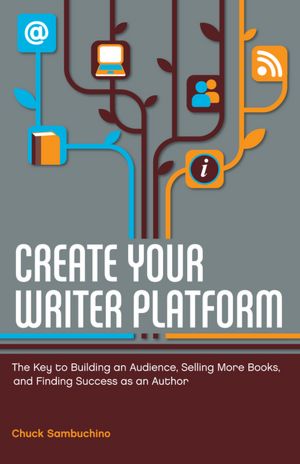
Create Your Writer Platform: The Key to Building an Audience, Selling More Books, and Finding Success as an Author
by Chuck Sambuchino

If you want a book that covers platform in all its variations, this is the title for you. Chuck Sambuchino is the author of humor titles such as How to Survive a Garden Gnome Attack and Red Dog Blue Dog, but he's also behind Guide to Literary Agents and Formatting & Submitting Your Manuscript. In other words, he's been there, done that, and lived to tell about it. Chuck covers social media, blogs, newsletters, public speaking, and more. Click the link above to check it out today.

Monday, January 7, 2013

Solving the World's Problems, by Robert Lee Brewer

Last week, I got some nice news from Press 53. They're going to publish my debut full-length collection of poetry tentatively titled Solving the World's Problems!

Robert Lee Brewer, Solving the World's Problems--in a hoodie!


At the moment, the manuscript consists of 80 poems, though we still have to go through the process of editing--so we'll see what happens. Since I just sent in the signed contract this morning, all "facts" in this post are "tentative" and "subject to change."

For instance, I have a "tentative" pub date of September 1, which would be perfect if it were to hold.

This post is basically a "can't keep it to myself" announcement that I hope will help get the word and excitement out to everyone who has been so supportive of me through my poetic journey. I. Am. Excited.

(Just ask Tammy.)

Anyway, I'm already buzzing with ideas to help this collection be as successful as it can be, and I'd welcome any help with that. If you know of places that review debut poetry collections, I'd love to know about them. If you know of blogs that interview poets, please share. If you know venues that support readings, let me know. In fact, if you have venues nearby AND a spare couch that you wouldn't mind having a tired poet crash on, I'd love to hear from you too.

Am poet. Will travel. After pub date.

I've got a pub date!

Did I mention I'm excited?!?

So yeah, carry on. If you can help out, please comment below or send me an e-mail at robertleebrewer@gmail.com. Or message me on Facebook. Or Twitter. Whatever works best for you.

Yeaaaaahhhhh!!!! (Sorry had one last bit of excitement there.)

*****

Connect with me on Twitter, Facebook, and LinkedIn. Plus, sign up for free e-mail updates from this blog in the top right-hand corner of the page.


*****

Check out these other inspiring Not Bob posts:
*****


Create Your Writer Platform: The Key to Building an Audience, Selling More Books, and Finding Success as an Author
by Chuck Sambuchino

If you want a book that covers platform in all its variations, this is the title for you. Chuck Sambuchino is the author of humor titles such as How to Survive a Garden Gnome Attack and Red Dog Blue Dog, but he's also behind Guide to Literary Agents and Formatting & Submitting Your Manuscript. In other words, he's been there, done that, and lived to tell about it. Chuck covers social media, blogs, newsletters, public speaking, and more. Click the link above to check it out today.