Friday, April 5, 2013

Helping Other Writers Is Key (Amy Freeman guest post)


I joined the Platform Challenge late, but once I committed, I learned mucho. I began with the basic instruction. I created a Blog, made Facebook pages, and joined Twitter (which up until then I swore I would never do…didn’t see its value until Robert’s challenge). I also joined Google +, Tumblr and eventually LinkedIn.

I sent out messages and invites to friend and acquaintances. My stats grew--mostly friends and family. But I wasn’t getting the connection I wanted. After mulling it over a bit I asked myself “What would make me want to join or follow a website? What would grab my attention?”


The answer was--something that might give me exposure as well.

Back Scratching
I posted a thread to LinkedIn--a “you scratch my back I’ll scratch yours” invite. I immediately received responses, people wanting to swap blogs, pages and websites from all over the globe--from Australia to Russia, from the U.S. to the Middle East.

I then took it one step further creating “Write Addicts,” a page specifically designed to promote any writer’s work. Each person who connected with me received an offer to have their work promoted on this new writer’s page. Not a single person rejected this offer. Why would they? 

The upside for me? A global collection of writers knowing who I am. I am not just a nameless clicked “follow” button on Twitter, or a random checked “Like” on Facebook. These people know my name. Many have reciprocated, extending me guest blog opportunities and interview spots. I have made new friends in the writing world.

Great Karma
The best part is gaining exposure while helping other writers like myself. The literary world is tough. Reaching out and supporting one another in this flooded and competitive field is so crucial. If you can lift your own stats and help someone else at the same time--well that’s just great Karma, right?

These actions took only moments on my part and each participant was so grateful. I have learned that successful social networking is two-sided. I received back what I was willing to give, and so far it is a gift that keeps on giving!


*****

Amy Freeman lives in Salt Lake City, Utah, with her husband and 10-year-old son. She has four other children and one grandchild--all of which live too far away! She's active in several writing and critique groups, has won some local awards, and recently published an article in a global religious magazine. Amy's first novel comes out this spring. Learn more at her blog http://vedunywriter.blogspot.com or send her an e-mail.


*****

Follow me on Twitter @robertleebrewer

*****

Check out previous Not Bob posts below:


Tuesday, April 2, 2013

Living Outside of Your Comfort Zone (guest post Kelly Williamson)

It is with the utmost clarity that I recall the moment my junior-year English teacher asked me to see her after class.  I was certain I had messed something up, missed a due date, failed miserably at reciting my memorized poem with any degree of style.  My heart was racing; I hate confrontation, still do to this day.  The words she uttered were not even close to what I expected.

"Do you have any idea how talented you are? This piece is one of the best I've read since I started teaching high school.  This could be your direction, your future."

Talk about being taken off guard.  I was flattered, though I didn't follow that path. I went into education, a decision I will never regret.  At times throughout my life, however, I have wondered what would have happened if I had taken her advice, had become a writer right off the bat. 

Reflecting on a Ship That Sailed
I assumed that, because I did not go to school for writing, that I was simply reflecting on a ship that had sailed for me.  That is, until I participated in last April's Platform Challenge, run by Robert Lee Brewer.  The challenge consisted of daily tasks, all of which would help writers build their platforms; get their author brand out into the world.

Just a few months before this challenge, I had started blogging about a difficult situation in my life, largely because it was helping me process the unimaginable.  That's when I started to think that perhaps, one day, I could write a book about all of it and somehow make a difference.  It seemed farfetched and lofty, but it was a thought.  

I don't even recall how I found Robert's challenge, but as I looked into it, I learned that an aspiring author is advised to build a platform to help readers to get to know you and your writing, and that it can help you sell a manuscript or land an agent.  A platform can help you to become a known entity in the world of writing.  I read more about the challenge, and I did hesitate.  I am really a quiet person by nature, and I have never believed my writing to be much more than really great for a high school junior; never expected to have an audience beyond my own friends and family. 

*****

Learn how to earn an income while writing copy with the 4-week online education course: Breaking Into Copywriting. In it, writers learn how to produce high quality advertising, create a killer sample ad for your portfolio, find and secure work as a copywriter, and more. Click to continue.

*****

Jumping Outside the Comfort Zone
I was driven by my topic, though, and I took a leap of faith, jumping into it with an open mind, even though doing so was entirely outside of my comfort zone.   Before the challenge, only family and friends were aware of and read my blog, and that felt safe.  Through the platform challenge, I was taking real-life steps to expose my writing to many more people, strangers and experienced writers.  I was on guard, and I was gearing up for constructive criticism in an area where I didn't have much confidence in the first place.

The opposite happened, however, and I gained amazing things as the challenge progressed.  I was connecting with new people and writing resources, getting positive feedback about my writing, and building enough confidence to provide feedback to others.  By the end of the challenge, I had grown by leaps and bounds, not only as a writer, but as a person.

As the challenge ended, I reflected a lot on the experiences and lessons of the month previous, and I was able to recognize my biggest take-away:  Living outside of my comfort zone, though scary, opens doors.  I started living a little more openly, with more confidence, and outside of what felt safe.  I had no idea how much it would change my life.

Living Outside That Zone
This past Christmas, one much better than our last sorrow-filled Christmas, my daughter bought me tickets to see Daughtry and 3 Doors Down.  I am a huge music fan, and Daughtry is one of my favorites.  I, in turn, bought us a VIP package to meet the bands.  As the concert approached, I started paying a little more attention to Chris Daughtry on Twitter, getting excited for the show, and I saw that he was just completing a fitness challenge with trainer Jen Hendershott.  This caught my interest.  One thing I had let go when tragedy struck my family was my health and fitness.

The concert came, we met the bands, and I actually struck up a little conversation with Chris about his challenge; another bold move on my part.  I followed that up with an e-mail to his trainer, asking about advice for getting back to a healthier fitness level.  I wanted to find a positive outlet to better heal on the inside, while also taking care of my body in a healthier way. We came up with a great plan, and my new fitness challenge blog was born.  It was a whirlwind, and I recall thinking "Is this really happening?  Did I just sign on to be trained by a fitness champion, and hold myself accountable on a blog?" 

Yes, that really happened, and then some.  Not only did I find a positive way to heal and a friend to guide me through it, but I also signed a publishing contract to write that memoir, the one I dreamed could maybe make a difference. 

My dreams have become my reality, and it never would have happened if I hadn't stepped outside of my comfort zone and followed Robert's advice.  I will forever be grateful for this experience and the lifelong affect it has had on my life.

*****

Kelly Williamson is an Assistant Principal and writer who lives in Massachusetts with her husband and two children.  She has written short stories, personal essays, and is currently working on a memoir that depicts the tragic situation her family found itself in just over a year ago.  As she works to move on, Kelly has a strong will to use her writing as a way to help others in similarly difficult situations.   Digging deep to find strength, she has begun to redirect her focus on the many positive things in life, including her writing, her loving family, and her desire to live a healthier, more active lifestyle. You can connect with Kelly on Facebook, Twitter, and her two blogs: www.kellyannwilliamson.blogspot.com and www.journeywithjenh.blogspot.com.

*****

Follow me on Twitter @robertleebrewer

*****

Also, check out other previous Not Bob posts:

Monday, April 1, 2013

Like an Online Writing Conference (guest post Linda G. Hatton)

Before April 2012, I had reached a point in my writing path when I was considering attending a writing conference. A couple of factors changed my mind about going through with it. Mainly, my schedule was overloaded with my kids’ activities and I wanted to be sure my writing skills were advanced enough before spending the money.

Still, I craved a networking opportunity. I also wanted the knowledge I would gain from attending a conference: tips on publishing, platform building, and querying, to name a few.

*****

Attend the best writing conferences!
The best writing conferences on the east and west coast are hosted by Writer's Digest. They include boot camps, breakout panels, and the super popular pitch slam event. Learn more.

*****

Platform Challenge
So when April came around, hoping to gain some of this education, I decided to participate in Robert Lee Brewer’s Platform Challenge. I went places I never imagined, all from the comfort of my kid-activity-monopolized lifestyle.

His challenge included such activities as joining a handful of social networking sites, some of which I had previously avoided: Google+, Twitter, LinkedIn, and Facebook. Participants were also asked to start a blog or spruce it up if they already had one. Other exercises included creating an editorial calendar, commenting on other blogs, pitching at least one guest post blog to another blog owner, and contacting an expert for an interview post.

I was more successful at some of the assignments than others. For instance, I still haven’t perfected the art of my own editorial calendar, though I am determined to eventually find a method that works best for my style of writing (“seat of my pants”).

Since I had already signed up for Facebook, I could breathe on that day.

I fumbled around on Twitter during the challenge and can say that, one year later, I am actually beginning to enjoy it and I now regularly participate in Twitter chats.

*****

Make Money With Twitter
Learn how Twitter can lead to more than just followers...it can lead to an extra source of income. In the OnDemand webinar, Using Twitter to Boost Your Writing Income, Tim Beyers explains the importance of building community, engaging your audience, building sources of income, and more. Click to continue.

*****

Take the Challenge
If you haven’t yet participated in the challenge, pick a month to commit to working through the assignments on a daily basis. At the end of the month, focus on your “weaker” areas or tasks you haven’t completed, easing your way in if you have to. As an example, it’s easier to pitch a guest blog post to a friend, but once you’ve accomplished that, move on to pitching to blog owners you don’t know personally.

One of the best parts about participating is the group of supportive and helpful writer friends I have made, most of whom now congregate as a community under the name Wordsmith Studio. I can’t imagine I would have gained such a supportive system from networking over just a few days.

Overall, participating in Robert’s challenge was the best thing for me. It not only helped me to build my confidence as a writer, but also taught me some very handy skills in marketing myself. Most importantly, it helped me to come out of my shell of shyness, so that when I do actually make it to a writing conference, I think I will be better prepared to network in person

***** 


Linda G. Hatton spends her days writing—poetry, novels, screenplays, web codes, or notes to her children. Otherwise she gets a little cranky. Read more about Linda at her writer website. Also, check out her online literary publication, Mouse Tales Press.

*****


Follow me on Twitter @robertleebrewer

*****

Also, check out previous Not Bob posts:
 

Saturday, March 23, 2013

3 SEO Myths That Scare Writers (And How You Can Use Them to Your Advantage)

This guest post is by Alexis Grant, an entrepreneurial writer and digital strategist. To learn more SEO tactics, check out her upcoming free webinar, Easy SEO Tips for Bloggers.

Creative writers often avoid search engine optimization, for two reasons:

  1. We’re intimidated by SEO because we don’t really understand it 
  2. We think using SEO in our writing forces us to be Iess creative

But the truth is, SEO can only help your career as a writer. By adding this tool to your arsenal, you’ll get more search traffic to your work -- which means more eyes, more opportunities and even more money. In other words, there are a lot of reasons why writers should care about SEO.


Here are three myths about SEO that scare writers into not optimizing their work:


Myth #1: SEO is complicated


Sure, if you wanted to learn every little detail about how SEO works, you’d have a lot to learn. But the truth is, there’s no need to dig down into the nitty-gritty tactics that will make your brain explode. Instead, you can benefit in a big way just from understanding and implementing a few simple strategies.


While SEO might sound like a daunting acronym, it actually favors the laymans’ language. Think about which of these terms you’re more likely to type into Google:


  • How to write a press release
  • Components of media package for maximum exposure


You chose the top one, right? That’s how most other people use search, too. And the terms those people are typing into Google are the ones you want to use in your writing.


Writing in layman’s terms benefits you two-fold, because if you’re writing for online readers you don’t want your voice to be stiff and formal anyhow. Writing in a conversational voice helps readers relate to you and helps Google showcase your work at the same time.


Myth #2: You have to write with SEO in mind


Yack. I can hear you sighing already. Who wants to think about SEO while writing? Doesn’t it ruin the creative process?


But you actually shouldn’t write with SEO in mind. Music to your ears, right?


Instead, write like you always write, and then go back later and look for ways to optimize for search traffic. The easiest way to do this is by scanning your work to make sure you’ve included smart keywords in these places:


  • Your headline
  • Your first paragraph
  • Your subheads (also make sure you have subheads -- not only does Google like them, they also make it easier for readers to quickly scan your work)
  • Anchor text for keywords (rather than making click here your link, link keywords that relate to the link)


This might seem like a lot of effort, but once you get it down, you’ll be able to look at something you’ve written and spend only a few minutes optimizing for SEO. For my own work and blogs I edit, I spend the most time on headlines. Why? Because not only are keywords in your headline important for SEO, headlines are also your way of enticing people to click on the post. That phrase is your one chance to reel in each reader, so it’d better be good.


Myth #3: You have to put a ton of effort into identifying the right keywords


Who has time for that? What we want to be doing is writing, right?


While you can spend a lot of time on keyword research, using tools like Google Trends to help you figure the best keywords for your topic, it’s absolutely not necessary. Instead, take five minutes and just use your brain. (You could also read this post Robert wrote on keywords for writers.)


What would YOU type into Google if you were trying to find the article you just wrote? How would you describe whatever you’re looking for in layman’s terms? Who, exactly, is your target audience?


Try to look at your post like the reader would. For example, if you’re writing for writers, make sure the word “writers” is in your headline. But if you’re writing a post about dogs that you’re hoping pet owners will read, don’t include “pet owners” in your headline because most people wouldn’t type that into Google. Instead, include the keyword your target audience would use to search for that information on Google; in this case, that’s probably something like “dogs” or “pets.”


Using the right keywords in your headline won’t only help you rank high in Google results, it will also help readers find your post, quickly understand what it’s about and, most importantly, click on it.


Yes, it will help humans find and click on your work. Because that’s what this is really about. Sure, you’re optimizing for Google, but you’re really optimizing for people. You’re helping people find you. And the more people who find and read your writing, the better.


This guest post is by Alexis Grant, an entrepreneurial writer and digital strategist. To learn more SEO tactics, check out her upcoming free webinar, Easy SEO Tips for Bloggers.

Friday, March 8, 2013

Ignoring One's Calling (Part 2)

Here's the conclusion of the story started by Amanda M. Socci, the Creative Idea Gal, last week. Click here to read the earlier post.

*****

Age 29: Finding Success with another Career Change
Amanda M. Socci
I struggled finding a suitable career, until magic happened in July 2001.  Out of the blue, with no discernible trail, I received a call from a headhunter who had picked out my resume after seeing the words “law” and “marketing.”  To say that I was floored is an understatement.  That afternoon, pretty much in a drunken haze of disbelief, I went to the interview and got the job.

For 5 ½ years, I worked as a technical writer supporting the United States Patent and Trademark Office solely based on my credentials as a law school graduate and for having self-published “Consumers Everywhere.”  Despite not having a stitch of experience in information technology, I worked hard and earned myself a reputation as a strong and thorough worker.

Those 5 ½ years were heaven, but they still didn’t fulfill my soul creatively.  I basically ignored my calling to write, again, by focusing on my new career in information technology while building upon two original ideas that I came up with: Amanda’s Ideas, LLC and Amanda’s Charities, LLC. 

I founded two businesses to sell two distinct services: creative services including story-writing, sewing quilts, and making diaper creations, and charity services: to be hired by businesses that wanted me to execute small-scale charitable programs.

After devoting thousands of dollars and tireless energy to those efforts, can you guess what type of success I enjoyed for being a business owner with an original concept? You guessed it - - goose egg success.  Thankfully, God already had other plans lined up for me, so I ended up drowning my business sorrows in my next calling as a mother, but still not a writer.

Age 34: Motherhood and Leadership Stints
I had my oldest daughter in 2006 and rightfully began focusing all efforts on her.  During this time, I became domestic, turning moments of free time into cleaning, cooking, and shopping time.  On a lark, I found a perfect telecommuting job doing freelance writing of hotel descriptions, but that lasted only a short time.

It was hard finding telecommuting writing jobs, so I gave up. Once again, I turned to new career choices to prove to myself that I could easily get a job that paid quick money and didn’t have the uncertainties of writing. To support this bright theory, I turned to a leadership role in charge of a group of ladies with a religious organization as well as a sales representative gig with AVON.

If you could peek into my life and see how many hours of training, learning, and dedicated work I logged into both of these projects, you would officially dismiss me as stupid, and I would have to agree.  I was so enthusiastic to do everything else that didn’t involve writing, thinking naively that I could propel my career to new heights selling $2.99 lipgloss.  Fortunately, that treadmill of doom ended abruptly in the summer of 2010, when I learned I was expecting my second daughter.

I experienced the worst morning sickness I could possibly endure. Yet, miraculously, I found a telecommuting job writing high school sports features.  Once again, that stint was short-lived.  Right after my second daughter was born in 2011, my oldest was suddenly getting ready for kindergarten, so all gears shifted towards school preparation while now trying to balance two squirmy girls.

My daughter’s kindergarten school year began beautifully. I put my over-achiever hat on while volunteering to be the troop leader for my daughter’s Girl Scout troop.  I also helped my husband chair the chess student group.  I was very busy, even overwhelmed. I was working non-stop and sick all the time from exhaustion.

Little did I know my break-neck pace was catching up to me and preparing me for the big reveal.

Age 40: WTF are you doing?
I continued working hard as a Girl Scout leader right up until February 2012. I had already planned so many activities for the girls, but I was annoyed because the parents were not responding in a way that I wanted them to.  I got mad.  Really mad.  The pressure had been building up for a while and I was fed up with having sacrificed quality time with my family for a bunch of unappreciative people.

It seemed that God had made these circumstances so unbearable for me, that I would have no choice but to quit.  In February 2012 I abruptly quit my leadership role with the Girl Scouts. The way that things happened was so violent, that I felt as if a strong arm had grabbed me by the shirt with brute force and pushed me backwards. I crashed into a brick wall, and like the silly cartoons we watch with our kids, I saw a little circle of stars and birds flying around my head.  What just happened?

That day, God spoke to me, but it wasn’t the gentle calling I had experienced for most of my life. These were words and actions spoofed by the dude with the floppy hair in Twisted Sister’s “We’re Not Gonna Take It” video, where he scolds the boy and asks “what are you gonna do with your life?”  Except, it wasn’t the dude, but God himself telling me in his own way what I should be doing with my life.

If that experience didn’t cut through my thick head that I should stop playing around with fly-by-night career choices and buckle down to what I was meant to do, then nothing would.  From that moment forward, I quit my nonsensical thinking cold turkey and opened up the curtains to a bright future as a freelance writer.

Not Going to Take It
I knew immediately what my first project would be.  I was going to start writing a book on faith hoping to inspire people with torrid tales of my embarrassing life dramas and uplifting endings couched in faith.  And I did, except I started off slowly by blogging my book on a local news site.

I also started hanging out on Twitter again, hoping to connect with writers.  Eventually, I found Robert Lee Brewer’s April Platform challenge for writers. My personal success within Robert’s challenge went beyond my expectations, as I never expected I’d make so many new wonderful supportive writer friends.

Today, I am no longer hearing that familiar calling in my life because I am living it. Because I have such an open mind about the possibilities of writing, I have improved my blogging, furthered my social media goals, made some pretty good connections, and have achieved the very thing I ran away from so many years ago - - the act of writing consistently.

The biggest lesson I’ve learned through all of this is to pay closer attention when I get that familiar feeling that I should be doing something.  God is not the same to all of us; he is what we make him out to be.  He will talk to all of us and drop hints about our calling in ways that are custom-tailored in our lives. 

For me, that calling happens to be writing. Although I felt that urge back when I was 10, I voluntarily ignored the urge and chased the mirage of success through non-writing work that only paid the bills, but left a void in my satisfaction thermometer.

After having sustained head injuries from being body slammed against the metaphoric brick wall and answering my life’s wake-up call in the positive, I am living proof that it is never too late to answer God’s calling.

*****

If you have something important you'd like to share on the Not Bob blog, please don't hesitate to contact me by e-mail at robertleebrewer@gmail.com with the subject line: Not Bob Guest Post. Please include an idea or two you have for a guest post, your credentials, and how you think it fits in with this blog. The more specific you can be the better.

*****

Connect with me on Twitter, Facebook, and LinkedIn. Plus, sign up for free e-mail updates from this blog in the top right-hand corner of the page.


*****

Check out these other helpful Not Bob posts:
*****


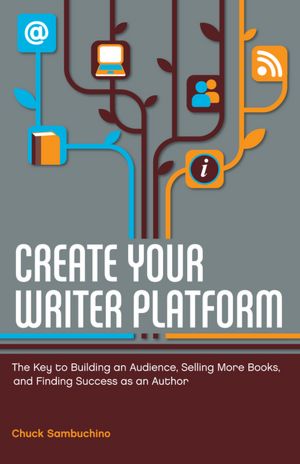
Create Your Writer Platform: The Key to Building an Audience, Selling More Books, and Finding Success as an Author
by Chuck Sambuchino

If you want a book that covers platform in all its variations, this is the title for you. Chuck Sambuchino is the author of humor titles such as How to Survive a Garden Gnome Attack and Red Dog Blue Dog, but he's also behind Guide to Literary Agents and Formatting & Submitting Your Manuscript. In other words, he's been there, done that, and lived to tell about it. Chuck covers social media, blogs, newsletters, public speaking, and more. Click the link above to check it out today.


Thursday, March 7, 2013

What's Working for Your Platform? (Call for Submissions)

Last April, I led a challenge for writers interested in kick-starting their writer platforms. Each day, there was a new task to be done that day. After 30 days, writers had a better handle on their platform-building efforts (or at least that was the plan--and what I've been told). If you haven't yet, please start taking the platform challenge today as an independent study.

If you have taken the challenge (whether in April or later on independently), I'd love to hear from you about what's been working or not working over the past year for you. In April, I plan to share guest posts from Platform Challenge veterans about their specific accomplishments and obstacles.

The Good, the Bad, and the Ugly
I'd love to hear everything. And the posts don't have to specifically call out the challenge. Rather, I (and I have a feeling Not Bob readers) want to know specifically what's working for you, why you think that is, and how others might be able to duplicate it. Or what's not working for you, why you think that is, and then maybe we can get comments from readers.

My hope is that as a group we'll gain a few things from this exercise:
  1. Learn something new. We should never quit trying to learn new things, and the best way to accomplish that is by sharing our collective knowledge.
  2. Find inspiration. I've found over the years that the best way to spark new ideas is to look outward and then spin what I see around in my head. I'm inspired by the work of others.
  3. Build community. Last April, community sprouted in various ways, including the very cool Wordsmith Studio. While it's great to continue strengthening that community, I'm sure this project will bring in new faces as well.
  4. Increase traffic. Guest posting is a great way to increase traffic and find new readers. This is a great opportunity to attract new readership.
  5. Strengthen our platforms. Every small step forward, every post, every new connection, every bridge built--it all helps strengthen our writing careers. Here's a mantra: Don't burn bridges, build them.
How to Participate
This is the easy part. To participate, please just send me an e-mail at robertleebrewer@gmail.com with the subject line: Lessons Learned Guest Post. In your message, include the following information:
  • One or two ideas for what you might share or cover in your guest post. Don't be afraid to throw out some crazy ideas. Relate it to your personal experience but remember that your experience should help others (that is, not just a self-serving post).
  • Your name, e-mail, URL to website and/or blog. This information often goes missing when I make these requests. Crazy, I know, but true.
  • Brief note about yourself. Don't worry if you have very little experience and don't try to over-inflate. I won't reject guest posts based on this note, but it does help me understand who you are and where you're coming from. Try to keep these notes down to 3 or 4 sentences in one paragraph--after your guest post idea(s).
What I Expect
I'm not sure how many people will participate, so I'm not sure how the posts will be distributed through the month (and/or if they'll continue into May and beyond). However, I do expect the posts to run around 300-800 words in length with an image or two (even if just a head shot of you).

Based off how many pitches I receive and when I receive them, we'll figure out deadlines. Some folks will surely be ready to go at the beginning of the month, while others will need more time. I'm flexible, and we'll shoot to have everything spread appropriately throughout the month.

This is a volunteer effort (on my end and yours), so don't put too much pressure on yourself (or others). The main thing is to be helpful, encouraging, and have fun with the process.

I hope you'll consider joining the effort!

*****

Connect with me on Twitter, Facebook, and LinkedIn. Plus, sign up for free e-mail updates from this blog in the top right-hand corner of the page.


*****

Check out these other Not Bob posts for writers:

Friday, March 1, 2013

Ignoring One's Calling (Part 1)

One of my favorite things for 2012 was the life-changing moments series of guest posts in which readers shared a moment that changed their lives--and how even in the seemingly worst situations they found a lesson that helped them move forward. I'm excited to share an entire series of moments from Amanda M. Socci.

Amanda is a freelance writer and blogger from Alexandria, Virginia, who writes posts on her personal blog (http://creativeideagal.com), blogs entries on a book on faith which she is blogging on a local news service (http://mountvernon.patch.com - search for "Socci"), and searching for freelance writing assignments. Amanda enjoys taking unusual viewpoints in her nonfiction writing, incorporating meaningful analysis with hints of humor, along with references to pop culture. A diehard researcher and natural observer of life, Amanda writes about diverse topics, hoping to entertain her readers through unique perspectives on life.

-->
Amanda M. Socci

Did you ever experience a time in your life when you felt that you were meant to be doing something and ended up ignoring that feeling, only to let that feeling get stronger?

I did.  I felt a calling to write early on in my life but chose to ignore that calling several times.  Each time I felt the calling, the urge to write got stronger and it became harder to ignore.  One day, the calling shoved me up against a brick wall like a violent wake-up call.  I finally answered my calling.

After 30 years of messing around in dead-end career choices, I finally got down to business and unflinchingly declared myself a writer at the ripe age of 40.  What follows is a chronological sequence of events leading up to the pivotal moment where my life changed. These are the moments where I ignored the calling in my life, which, as I have come to realize, is writing.  This is my story.

Age 10: Reading lots of Books
My writing career began surreptitiously with a foundation in reading.  Just a babe at 10 years old, I borrowed lots of books from our library, loving getting lost in the teenybopper romance stories.  I learned about an author who was published at the age of 13 and became obsessed with being a published author.  From that moment, I put an unnecessary amount of pressure on myself to be published by the age of 13.

As much as I wanted to write, the pressure of copying someone else’s success of publishing a perfectly written book by the age of 13 was more than I could handle.  Too much planning in the brain led to indecision and no real writing. 

This would be the first time in my life that I ignored my calling.

Age 13: Being Different is Hard
When I was 13, I was your typical 8th grader from New Jersey, sporting big hair and neon clothes, ogling over the hotties in Duran Duran.  As typical as I appeared to the outside world, I was not typical on the inside.  I was depressed and had thoughts of suicide because I was so different than everyone else and not accepted for who I was. 

I became an ostracized square peg living among attractive white people.  Back in the 1980s, my hometown in rural New Jersey was 95% white, with only 5% minority, including African Americans and us, Latinos.  My parents and grandparents were the ones born in Colombia, South America while two siblings and I were born in the United States.  That didn’t stop the cruel illegal alien and immigrant jokes from invading our breathing space.

I went to a Catholic school and dutifully learned my Catholic teachings, practically to a fault. I excelled at school when I failed at relationships.  I buried my nose in the schoolbooks and in reading.  Out of pain came a love for fiction.  My own invented fiction.

Born Amanda M. Castro, I took on a pen name “Chantal Pearcy” as a derivative of my name in French class “Chantal” and the last name of my favorite singer “Stephen Pearcy” from the heavy metal rock band, RATT.  Once I took up that pen name, everything was in my power. 

I was no longer the helpless Amanda who cried because she was teased, taunted, and humiliated for being a Latina, for having acne, for liking the color red, or for any other ridiculous reason.  I became the dark and moody Penny Marshall, adeptly directing my characters on paper, killing off some characters, resurrecting others.

I also wrote letters to God, asking him why he was being so unfair to me.  I ended up writing a lot.  I loved the satisfying experience of writing and creating. I relished every second of it.   

Age 15: Things Start to Turn Around
By age 15, I was a sophomore in high school.  With my life still in turmoil over personal issues, I dove headfirst into my schoolwork as well as my writing, which gave me a cool sword of smarts and writing chops.  I created a novella which I was very proud of.  I submitted a draft to my favorite English teacher, who promptly dismissed it with a polite “thank you” and a few grammatical fixes, but without any substantive feedback. 

My junior year in high school became a turning point in my writing career, dare I say, prophetic.  I read Bram Stoker’s Dracula, which I thought was exceptional, and had a homework assignment to write an essay describing the symbolism in Dracula.  Using my own analysis and creativity, I wrote some pretty decent descriptions of the characters with an impressive masthead that resembled what you’d see in a playbill.

After I turned in my assignment, my English teacher demanded to know how I came up with my description of the main characters.  I calmly explained that I invented everything out of my own imagination. Would you believe that I was borderline accused of plagiarism?  Strangely, I didn’t mind the controversy and silently smirked at myself, happy that my writing could cause such a ruckus in small-town, New Jersey.

Such a strong reaction to my writing meant I was on to something.  Was God calling me to write for a living?  I was only 16 years old when I felt the calling so vividly. Was writing the thing I was meant to do for the rest of my life?

My parents had always been supportive of my eccentricities, but they weren’t too keen on my getting into writing as a profession because, as my father rationalized, in order to be a writer, I would have to write every day.  That wasn’t something I was willing to commit to because my writing happened only when inspired.  If I wasn’t inspired, I could not bring myself to write.  Let’s just say that by convincing myself that I couldn’t write as a result of a perceived lack of inspiration, I succeeded and was not able to write. 

Since I refused to write every day, my junior year in high school would be the second time in my life that I ignored my calling.

Age 19: Recycling Moves into my Heart
In 1991, I was an impressionable 19 year-old who had been shielded from many life experiences and was anything but street smart.  I headed to the progressive, forward-thinking college of Rutgers University in New Brunswick, New Jersey, where I first fell in love with the concept of recycling.  Before I even knew who Ed Begley, Jr. was, I became him, trying to convince my professors to recycle, with very little time or interest in writing professionally. 

I took several writing-centered classes but refused to get an English minor degree because I couldn’t stomach Shakespeare.  Instead, I shifted gears altogether and became fascinated with crime and the psychology behind the crime.  I took so many classes supporting the science of crimes, that I changed my major and graduated proudly with a Bachelor of Science degree in the administration of justice.  I was headed to law school.

How does one go from being depressed, to writing as an outlet for dealing with emotions, to a sudden interest in crimes en route to law school?  Easy.  Some innocent comments from my parents made the difference.   My parents prodded me to try my hand at law because they said I was good at starting debates with my brothers and always looking to get the last word in.

Age 23: Law School Beckons
In late August 1995, I received rejections from all the law schools that I applied to. I was stuck and didn’t know what to do.  After some more prodding from my father and a 10-page persuasive, heart-written, detailed letter made its way to the dean’s desk, I earned a coveted spot at Howard University School of Law in Washington, D.C., despite having bombed the LSATs and dropped my grades while in college.

Being in law school certainly made me smarter, but it also kicked me in the butt and made me sweat.  I will never forget how the first week of law school had me reading law cases, like complicated short stories for geniuses, and spending just about eight hours of intensive studying to understand them. 

The next three years had me writing legal briefs and legal research papers, which I loved, because I was reintroduced to the mechanics of writing while at law school.  But this writing was different.  I couldn’t just invent what I wanted.  I had to support every one of my statements with thorough legal research of past legal cases (legal precedent) that tackled the same subject matter of the original question or problem.  It was excruciatingly complex and not fun at all.

Nonetheless, I was thoroughly excited to use my new legal research and writing skills to produce strong writing once again.  By this time, my interests were now in consumer affairs, and I seemed to be enthralled with the bureaucracy of business, all while proudly writing about it.

After graduating from law school, I got married and was very happy spiritually, but physically, I was burned out.  I took some time off from the intensity of law school and turned to couponing before the concept of extreme couponing became commonplace. 

I was the original extreme couponer, hoarding multiple coupon inserts, hitting our local supermarkets and getting tons of free stuff.  A far cry from burning the midnight oil and straining my eyesight in reading hundreds of legal cases, I finally felt free again to be myself, but did nothing professionally.

Age 26: Answering the Call with a Huge Writing Project
After doing so much couponing, I became inspired.  Why not write about my good deals in a way that is funny, interesting, and informative?  The inspiration took over me and rained down a million funky thoughts, eventually turning them into “Consumers Everywhere,” a national publication for consumers that was quirky, cute, and promoted unusual themes in each issue. 

Although no one ever regarded “Consumers Everywhere” as special, I absolutely loved it because I did it all by myself without any help.  Plus, it marks the first time in my life that I felt that familiar calling and actually did something about it.

Despite the calling, however, reality set in and in my new marriage, I knew I had to do my part to help my husband bring home the bacon.  I gave up writing and looked for full-time work, in any field, so long as it paid the bills.  Complete strangers admonished me for not getting into the legal field after having graduated law school.  Little did they know how many years I would try to get into the legal field with no success.  That made me 0 for 2. No career in law, no career in writing.


...to be continued.

*****

The conclusion of this story will post next Friday.

In the meantime, feel free to check out some other Life-Changing Moments stories from 2012: