Showing posts with label Self Publishing. Show all posts

Tuesday, December 11, 2012

Creativity Trumps Following the Rules (Guest Post From Ernie J. Zelinski)

Here's a guest post from Ernie J. Zelinski, which actually originated as a comment to a previous post about the business of publishing. I don't usually re-purpose comments that way, but I wanted to make sure everyone had a chance to read his thoughts.

Ernie Zelinski, author of The Joy of Not Working and other titles


Fact is social media is not even necessary to promote a book, even though so-called social media experts will be in total denial about this.

I am very successful as a self-published author. I have been in this game since 1989 (a true pioneer and not like a lot of the impostors out there) and making decent money at it ever since my first book was self-published.

Print Sales Are Not Dead


My How to Retire Happy, Wild, and Free will sell about 9,000 copies on Amazon in its print edition this year. In fact, this title will likely sell the most copies this year in its print edition since it was first self-published in 2004. It has already sold a total of 15,000 copies and should reach 17,000 copies by the end of the year. (This proves that people who say "print is dead" are either lying of just plain brain dead.)

Yet my three Kindle titles have only sold 12 copies this month. Why does my How to Retire Happy, Wild, and Free sell so well? Because I don't rely on social media. As marketing guru John Reese (who was the first person ever to make $1-million dollars in one day marketing on the Internet) says, Social media is vastly overrated.

Creativity Trumps Platform


I notice that true best-selling authors like Brendon Burchard, whose The Charge has sold 80,000 copies in its print edition in the last 8 months, don't rely on social media. They have much better and more creative ways to sell books. So do I.

I am amazed at the lack of true creativity and ingenuity in this world. People use the word "creativity" because it sounds nice. They have no sense of the meaning of the word, however. They certainly don't show it in their actions.

Years ago I cut copies of one of my books in half and mailed either the top half or the bottom half of them to corporations with a creative letter that said if they wanted to purchase the book, they had to purchase a minimum of 10. This promotion led to revenues of over $15,000.

I can give several more examples of my own "unique" creative book-marketing tactics that I have used to have my books sell over 750,000 copies worldwide but I won't simply because consultants such as Brendon Burchard and Joe Polish charge up to $3,500 an hour for their consulting and coaching.

Here is a quotation about creativity that also applies to creativity in book marketing:

"What Is Your WOW Factor?
This applies to both the service
that you provide to the world
and the way you market it.
Make it edgy, make it snappy,
and make it punchy.
Even make it raunchy — but
make it different!
Real different!"
— from Life's Secret Handbook

Social Media vs. E-mail


In short, a great author platform does not require any social media at all. You don't heve to be on Facebook, Twitter, or LinkedIn to be more successful than 99.9 perent of authors regardless of what social media and book marketing experts tell you.

As John Reese said, "RSS, Twitter, Facebook, YouTube, BLAH BLAH BLAH. Yes, those methods can generate leads. Yes, those methods can generate some sales. But time and time again little old e-mail marketing kicks their butts — by a long shot"

*****

Ernie J. Zelinski is an international best-selling author, speaker, and prosperity life coach who helps adventurous souls live prosperous and free. Ernie is the author of the international bestsellers The Joy of Not Working (over 250,000 copies sold and published in 17 languages) and How to Retire Happy, Wild, and Free (over 175,000 copies sold and published in 9 languages). Check out Ernie's two quotation websites Sensational Quotes for Smart People and the Retirement Quotes Cafe for more great quotations on a number of topics.

*****

If you have something important you'd like to share on the Not Bob blog, please don't hesitate to contact me by e-mail at robertleebrewer@gmail.com with the subject line: Not Bob Guest Post. Please include an idea or two you have for a guest post, your credentials, and how you think it fits in with this blog. The more specific you can be the better.

*****

Connect with me on Twitter, Facebook, and LinkedIn. Plus, sign up for free e-mail updates from this blog in the top right-hand corner of the page.


*****

Check out these other helpful Not Bob posts:
*****


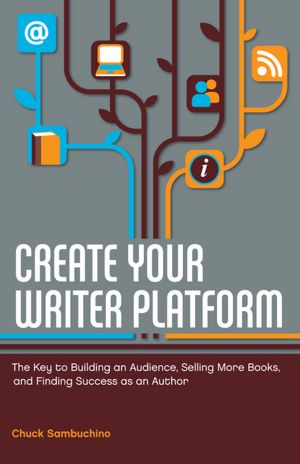
Create Your Writer Platform: The Key to Building an Audience, Selling More Books, and Finding Success as an Author
by Chuck Sambuchino

If you want a book that covers platform in all its variations, this is the title for you. Chuck Sambuchino is the author of humor titles such as How to Survive a Garden Gnome Attack and Red Dog Blue Dog, but he's also behind Guide to Literary Agents and Formatting & Submitting Your Manuscript. In other words, he's been there, done that, and lived to tell about it. Chuck covers social media, blogs, newsletters, public speaking, and more. Click the link above to check it out today.


Friday, December 7, 2012

What Writers, Editors, and Publishers Should Worry About

This recent article on tablet readers got me thinking about the publishing/media industry and writers in general, especially what we should all be worried about when we're writing our manuscripts, making our print and digital products, and then trying to sell them. My first thoughts were kind of wide-ranging and complicated, but then, it occurred to me that this is really simple stuff: Deliver what your audience wants and needs.

A former F&W Publications VP by the name of David Lewis used to be huge into customer surveys and focus groups, and here's why: He was always wary of us trying to tell customers what they want, instead of the other way around. Even though, many of us were the target audience, he wanted to avoid having two or three decision makers speak for the entire group.

Of course, I know there are times when customers don't know they want something, or they can't imagine something ever existing. For instance, it wasn't long ago that I'd have scoffed at the idea of owning a phone that allowed me to take (and store) images and video while checking e-mail, surfing the Internet, playing video games, and whatever else my phone can do. That said, all content doesn't have to be a smartphone.

Audience Needs
Just because readers prefer to consume their novels, magazines, and how-to books on Kindles, Nooks, etc., it doesn't mean they want every other word to link to some subplot, back story, or e-commerce page.  Often times, readers just want to read.

This doesn't mean the bells and whistles are meaningless, but most people would rather own an ugly car that works over a beautiful car that doesn't start. If you can make something beautiful and interactive, that's great. Just don't compromise the functionality of what your audience really wants: in this case, excellent content.

Discoverability
Another issue brought up in this article was how products are discovered in the storefronts. Hearst President David Carey basically says that products have to land in the upper carousel of the storefront to sell well. I'm sure most sales on Amazon have to rank well too. So, does that mean all publishers and writers are held at the mercy of Apple, Amazon, and other booksellers?

Umm, it shouldn't. This merely underscores how important it is for publishers and writers to have a direct line to their audience. It underscores the importance of an author platform. Publishers and writers can't just call it a day after a book gets in the bookstores; they have to shine a spotlight on their creations.

While fulfilling an audience's needs should always be priority one, working on discoverability (and yes, I know it's not a real word) is priority one-A.

Connection
As I mentioned above, discoverability should be a close second priority for writers, editors, and publishers--if they want to sell books. But it's one thing to talk about promotion, and anyone can just start throwing up links like crazy after a book is published. That doesn't mean anyone is going to pay attention. No, what writers, editors, and publishers need is to create platforms and make meaningful connections with their target audience and the influencers of their target audience.

This means you connect with bloggers, program directors, and editors of magazines and websites related to your writing and that in turn connect with your target audience. These are the gatekeepers to your target audience (your potential readers and book buyers).

Combine
For writers, editors, and publishers to find the most success in the future, it is imperative that they work to combine these three elements. They need to figure out what their audience needs and then deliver it in a way that their target audience knows that it exists and that it is exactly what they want. If the content really is great, this is the recipe that creates bestselling products and earns writers, editors, and publishers adoring fans, which ultimately leads to more fun projects in the future.

*****

Connect with me on Twitter, Facebook, and LinkedIn. Plus, sign up for free e-mail updates from this blog in the top right-hand corner of the page.


*****

Check out these other helpful Not Bob posts:
*****

And if you want a way to make a super investment in your author platform, check out the latest offering from Writer's Digest: Author Platform Consultations. There are three different levels--from a basic package (that is anything but basic) to an 8-week program that involves 30-minute consultations each week. Click here to learn more.

Saturday, December 10, 2011

What I Got Out of Self-Publishing

I pulled off a few firsts in 2011. Last month, I grew my first moustache. In June, I had my first daughter. And in April, I self-published my first chapbook of poetry. Then, I did it again in September. (Tomorrow, I'll have a new first, but I'll leave that for tomorrow.)


My first chapbook--fresh out of the box.

The process of self-publishing my first poetry collection was scary. Since I limited my print run to 101 copies, I wasn't worried about the financial part, but I was very afraid my announcement of a self-published poetry chapbook would be met with the sound of crickets.

The Announcement
Without a title or an official line up of poems, I made the announcement a year ago. As you can see in the link, I did have a publication date, price, and a way for folks to pre-order a copy. And then, crazy enough, people did start pre-ordering copies. I could breathe a sigh of relief.

A week after the initial announcement, I sent along some updates (the line up of poems). A couple weeks after that, the collection had a title: ENTER. Each new announcement brought in more pre-orders, which is so much cooler than crickets.

The Release
I'd been considering self-publishing a collection for a few years, but the time just never felt right. Then, a perfect storm of events conspired to make April 1, 2011, the perfect time to release a collection. First, April is when I run the April PAD Challenge on Poetic Asides (my poetry blog on WritersDigest.com), which is when I prompt hundreds of poets to write a poem a day through National Poetry Month.


At AIPF, I read poems and made great connections.

Second, I had two events scheduled for the beginning of April. On April 1-2, I spoke at the Blue Ridge Writers Conference in Northern Georgia. On April 7-10, I was a National Feature Poet at the Austin International Poetry Festival in Texas. For both events, I led workshops and read poetry.

So like I said, it was a perfect storm of events to promote the collection right from the release date.

The Results
The collection officially released on April 1, 2011. Before May 1, 2011, all 101 copies had been claimed. Two were lost in the mail, but the rest found their intended targets. I earned a little money, but more important were the connections I'd made with readers--one connection even led to me reading for the Houston Poetry Fest's "Out of Bounds" event in October.

I loved hearing from readers who received their copies. Some sent simple notes that said they loved reading the collection--and that meant a lot. But then, some sent detailed comments about specific poems they liked best and why. At the end of the day, it all added up to a huge helping of validation--and that's the number one thing I got out of the self-publishing process.


In September, I followed up ENTER with ESCAPE.

Lessons Learned
After publishing my second collection in September, I think I have learned a few lessons about self-publishing, though I'll add that every self-publisher has a unique situation. For instance, not everyone is publishing a limited edition poetry collection.
  • Develop an audience first. I've always felt the urge to share my work. In high school, I would fill up composition notebooks with poems and pass them around for fellow students to read (and let me know which they liked best). But I had to exercise extreme patience--almost 20 years worth of it--before the time felt right for selling out a limited edition poetry chapbook. If you don't have some sort of audience, you may be facing crickets.
  • Get the word out before publication. For both collections, I started getting the word out as soon as I knew I was going to move forward on them and hit a specific publication date. This helped motivate me as I went through the process of formatting the manuscript, finding a printer, and other activities. Plus, I could use pre-orders to motivate others to pre-order and/or purchase copies.
  • Keep excellent records. Since I had a limited edition collection of 101 copies, I simply made a list with 101 entries. Each entry received a name, an e-mail address, payment received, method of payment, and mailing address. This came in extra handy with the second collection, because I could give return readers the same number for ESCAPE they received the first time around for ENTER.
I plan to have at least one more limited edition chapbook self-published in 2012, though I don't have a publication date set for that yet. Then, I may try experimenting with self-published e-books--and, of course, sharing the results here.

*****

Connect with me on Twitter, Facebook, and LinkedIn. Sign up for free e-mail updates from this blog in the top right-hand corner of the page.


*****

Check out previous Not Bob posts:

Wednesday, November 9, 2011

5 Self-Publishing Tips for Writers (From a Self-Publishing Contest Judge)

Earlier this year, I was tasked with judging a self-published poetry contest. It was a very rewarding experience, and I found at the end that I ultimately had to decide between three or four books that were great. While I judged the final round, I also was involved with one of the earlier rounds too, so I was able to learn some very common mistakes that are made in self-published titles.

Here are my 5 key tips for writers who are self-publishing collections:
  1. Write your bio in the third person. I could probably spend an entire blog post on bio writing (o, wait a sec, I did), but be sure to write your bio in the third person. Just pick up a few books at the bookstore or library to use as a model.
  2. Have a designer design your cover. Of course, this advice is coming from someone who's designed both of his chapbook covers, so do what I say not what I do. Some of the cover designs I saw in the earlier round shocked me--in a bad way.
  3. Use your spine. By spine, I mean your book spine. Populate your spine with information, such as the title of the book and your name as the author. Blank spines will get lost on bookshelves.
  4. Secure endorsements. Take the time to send an early proof to a reader or two and request an endorsement of your book. Use a quote or two (citing the source) on the front and/or back cover of your book. Also, this might go without saying, but reward your endorsers with a complimentary copy.
  5. For more information... It's amazing to me how few writers in the earlier rounds--and even in the final round--did not include ways for readers to continue the conversation with the writer. At a minimum, I feel a self-published writer should include an e-mail address, URL for a website and/or blog, and mailing address. Don't treat your self-published book as the end product; it's part of your writing platform.
*****

Connect with me on Twitter, Facebook, and LinkedIn.


*****

Check out some other great posts for writers:

Thursday, September 1, 2011

Time to ESCAPE With Poetry: My Second Poetry Chapbook!

I picked up 101 copies of ESCAPE from the printer yesterday, numbered them today, and will sign and ship them out tomorrow (to those who have already paid). The first review is already in, and Tammy says she loves the collection. I'm sure she's not biased.

ESCAPE, my new chapbook!

As with my first collection, ESCAPE is available only as a limited edition of 101 numbered and signed chapbooks. More than 50 copies have already been claimed. The cost is $10, which includes shipping to any and everywhere. If you'd like to purchase a copy, just send an e-mail to robertleebrewer@gmail.com with the subject line: I Need an ESCAPE.

The collection brings together a series of poems that I started writing last summer and finished at some point over the winter (for the most part). All 22 poems were written following the same very simple poetic form. It shouldn't be too difficult a mystery to unlock.

Eight of the 22 poems found homes in publications, though my personal favorite did not. That's fine, I performed that poem often over the past year, and it always seemed to get one of the better responses from the audience. So it goes.

Those familiar with ENTER (my first chapbook) will immediately notice that I tried to keep a little continuity with the cover design. All my covers have to be approved by a 7-year-old named Reese, so there you go.

Anyway, I have some fresh copies of a brand new collection that will surely sell out ready to break out of the confinement of a cardboard box. Please help them make their escape.

*****

Connect with me on Twitter, Facebook, LinkedIn, Google+, and now Tumblr.


*****

Interested in self-publishing for yourself?

Check out The Complete Guide to Self-Publishing, by Marilyn Ross and Sue Collier. Or better yet, find a copy of The Indie Author Guide: Self-Publishing Strategies Anyone Can Use, by April L. Hamilton.

Thursday, July 28, 2011

Publishing My Second Collection of Poetry!

Earlier this year (April 1), I released my first ever chapbook of poetry, ENTER. The release was a very personal, limited edition release (only 101 individually numbered copies) that sold out in less than a month. I have no current plans to do another printing of that collection, but I am moving on to my next project: ESCAPE.
ESCAPE will be my second limited edition chapbook (once again, only 101 individually numbered copies), and ordered copies will be personally signed by myself. I'm really excited about this collection, because they are bound together by theme and my own little poetic form.

ESCAPE is something I've been putting together for more than a year. Many of the 22 poems have been previously published, and many of the poems have been performed at readings. Did I mention I was excited about this collection?

Here are a few more details about ESCAPE:
  • The official release date will be September 1, 2011.
  • The official price will be $10 (which includes shipping, regardless of where you live).
  • All purchased copies will be signed by the poet (that's me).
  • Super eager readers can pre-order now and receive copies somewhat before the "official release date." Also, pre-ordering is a good way to ensure that you get a copy before they sell out. Just e-mail me (at robertleebrewer@gmail.com) for details.
*****

This collection includes one of my favorite poems (which is also currently unpublished, though I've performed it at several readings), but it also includes several that have been previously published, including:
*****

Here's a nice review of my first collection ENTER by Maureen Doallas.

And here's another nice review of ENTER by Sheila Moore.

*****

Follow me on Twitter @robertleebrewer, or connect with me on Facebook, LinkedIn, or Google+.

And don't forget to sign up for blog posts direct to your e-mail inbox over on the right.

*****

To pre-order a copy of ESCAPE for $10 (includes shipping), send me an e-mail at robertleebrewer@gmail.com. I accepted payments for ENTER via PayPal, check and money order; I'm sure that's how I'll roll again this time.

Thanks for your support!

Thursday, May 5, 2011

How I Sold Out My Poetry Collection

On April 1, I officially released my self-published poetry chapbook ENTER. Before the month was over, I'd already sold out--and not just to friends and family. Copies of ENTER are either at or on their way to nearly all 50 states and quite a few countries, including Canada, Mexico, Ireland, Germany, Israel, Australia, and India. Today, I had to turn away my first would-be buyer, because all the copies are claimed. In this post, I'll detail what I think I did to sell out the collection within a month of the official release.


It took more than 17 years and 10,000 crappy poems to finally assemble the 21 poems in ENTER.

Work on craft
It all begins with the craft, and I've been filling up composition notebooks with crappy poems for more than 17 years now. I'm fairly certain I've written more than 10,000 poems in that span. Out of that spectacular wave of failed verse emerged the 21 poems that comprise ENTER.

Build an audience
The writing comes first, but a poet (or any writer) can start building an audience on Day 2. In high school, I'd fill composition notebooks with my poetry and pass the books around to my friends asking for them to indicate which ones they liked best. I used their input to help me figure out what appealed to my target audience. In college, I signed up for creative writing courses, which are heavy on the workshopping, and I read at a few open mics (shy as I am). Post-college, I was flung into speaking and then jumped at the chance to blog about poetry at Poetic Asides. If it weren't for the audience I'd already built, I probably would not have had the courage to attempt releasing ENTER. So while the writing is important, so is having a readership to share it with.

Make unique experience
I've known for a long time what I like and don't like in poetry collections--just the presentation of them. And for poetry chapbooks, I really like the old fashioned foldover variety without too much in the way of flowery design elements. Actually, my wife Tammy was lucky enough to have two very good chapbooks published through Rose of Sharon Press and Verve Bath Press. Anyway, I wanted something simple and personal to share with my readers. That's what I think ENTER is.

Two words: Limited Edition
It's hard to sell out if there is no finish line. I didn't know what to expect when I set my limited edition at 101 copies. Now that I've sold out before finishing the first month, I'm wondering if I set the bar too low, but I may have picked the perfect number. After all, there are now 101 copies of ENTER that are perfectly personal and unique. I can get more ambitious next time around.

Building anticipation
The official release date was April 1, which I chose because I had two writing events lined up for early April: the Blue Ridge Writers Conference and the Austin International Poetry Festival. However, I didn't wait until April 1 to start building excitement about the project. I made my first announcement on December 15, followed by an update on December 21. On January 6, I began accepting payments for pre-orders. I think I had nearly half the copies claimed by April 1.

And those are the main reasons I think the collection went as fast as it did. In future posts about the collection, I hope to cover kind of the back-end process and lessons learned. In the meantime, read this super sweet review of ENTER from Maureen Doallas.

*****

Follow me on Twitter @robertleebrewer

*****

It's too late to get a copy of my poetry collection, but it's not too late to check out some of my favorite collections by other poets:

Tuesday, April 5, 2011

Time to ENTER the Self-Publishing Arena

My collection ENTER was due to have it's official release on April 1, but the first copies won't be shipping until Thursday morning (and from Austin, TX). I suppose a week late is not the end of the world, though it would've been nice to have copies in readers' hands already.


My first ever chapbook, ENTER.

On April 1, I read a few poems from the collection during the reception for the Blue Ridge Writers Conference. As a National Featured Poet, I'll be reading some more from the collection at the Austin International Poetry Festival, which is where I'll be driving all day tomorrow.

Reese said he likes the cover the best, but I hope most people enjoy the poems more. I think the collection offers a good mix of poems--most of which have found publication in print and online publications.

The collection itself is offered as a limited first edition printing of 101 copies of which a little more than 60 are already claimed. The cost is $10 and includes shipping. Plus, I'm signing all copies I send out. If you're interested in purchasing a copy yourself, send me an e-mail at robertleebrewer@gmail.com with the subject line: Interested in Your Chapbook


Copies of ENTER that are ready to send.

To tell you the truth, this whole chapbook experience feels a little like my writing and publishing is coming full circle. When I was first interested in writing in high school, I self-published a little literary fanzine called Faulty Mindbomb that consisted of poems (by myself and other students), music reviews (from the all ages shows in Dayton and Cincinnati), comics, and other weird stuff. There's something that's just inherently fun about making little booklets to share with others. Hopefully, my readers will agree.

*****

Follow me on Twitter @robertleebrewer

*****

Interested in self-publishing for yourself? Then, check out these resources:

Friday, March 4, 2011

e-Book Pricing: Are You Chasing Readers or Money?

Of course, writers who publish books probably would like both more money and readers. However, some recent pieces I've read online has me wondering about what the best pricing strategy might be for e-Books.

The first piece was brought to my attention by @JaneFriedman: "The rise of the 99-cent Kindle e-book," by David Carnoy. In the article, Carnoy looks at some case studies of how some authors have lowered their e-book prices to 99 cents, despite the fact that the optimal royalty from Amazon is for books that are priced at $2.99 or higher.

The lower price points sell better, but they also de-value the product. But if that's what a writer needs to do to sell books, then that might be the only way to build a readership. More on that below.

*****

The second piece was brought to my attention by @ChuckWendig: "The $0.99 Sale: Results Are In," which is a post by Chuck on his Terrible Minds blog. In the post, Chuck breaks down the results of lowering the price point on one of his novels. Basically, the book was selling 40 copies per week. Then, Chuck dropped the price to 99 cents, and the sales jumped to 124 copies in 4 days (on pace to sell 200+ copies in one week).

Chuck's post also tackles some questions that I think are rather interesting concerning how to price e-books: Are you chasing readers or money?

*****

In both the first piece and the second piece, case studies indicate that sales jump when the price is lowered from $2.99 to 99 cents. However, is the lower price actually benefitting the writer? That's a more difficult question to untangle. Let's look at some numbers.

From the first piece, it sounds like a writer receives 35 cents per sale for a 99-cent e-book; the same writer would receive $2 per $2.99 e-book. At the same time, Chuck's numbers indicate that he sold roughly 5 times as many 99-cent e-books as $2.99 e-books.

So, let's say that an author sells 1,000 copies at $2.99. That would equal $2,000.

If the same author could sell 5 times as many copies at 99 cents, they might sell 5,000 copies at the 99-cent price point. That would equal $1,750.

Less money, but more readers. But there are other strategies a writer could try. For instance...

Start high, then discount
An author could decide to take advantage of the initial excitement for a release to use the higher $2.99 price point. Maybe 600 copies of the 1,000 copies sell over the first 6 months of a year. At $2.99, that would equal $1,200.

After that initial explosion of sales, the author could drop the price to 99 cents and collect the other 4,400 readers that rounds out the 5,000 at the lower price point. This would equal an additional $1,540.

Total take: $2,740.

Plus, the author still has the opportunity to reach 5,000 readers. Of course, this is all hypothetical. Would 5,000 people still pay 99 cents for a discounted $2.99 book? It starts to feel like the author is trying to time the stock market. But there are other strategies...

Sell low for new books, high for backlist
Maybe an author decides that he or she just wants to build readership with new books, especially if the author is writing a series of novels. The author just wants readership numbers to increase for the new books. As a hypothetical, let's say that the author's sales numbers increase 100% with each new book and that interest in the previous books (at the higher price point) increases by a smaller percentage.

Book 1 sells 5,000 copies at 99 cents = $1,750

Book 2 sells 10,000 copies at 99 cents = $3,500
+ Book 1 sells 1,000 copies at $2.99 = $2,000
Grand Total = $5,500

Book 3 sells 20,000 copies at 99 cents = $7,000
+ Book 2 sells 2,000 copies at $2.99 = $4,000
+ Book 1 sells 2,000 copies at $2.99 = $4,000
Grand Total = $15,000

etc.

After a while, such a hypothetical situation makes it so that you're generating more volume on new sales, but more revenue from those back list titles at the higher price points. And then, maybe you hit a point at which...

The new titles are at a higher price point
Maybe you write books that readers can't wait to read. And you're moving from 20,000 readers to 40,000 readers, and you decide it's time to start charging $2.99 per book, which really isn't a bad price for readers who are frothing at the mouth for your latest work. Maybe 25% of your estimated readers are scared away by the higher price point. That still means 30,000 stick around to pay $2.99, and you receive $60,000 in sales. Woo-hoo!

But do you need to be pinched? Or have water splashed in your face? Is this type of reader-money ratio scenario just a pipe dream? I'll be honest: I don't know.

However, these are some pricing strategies to consider, especially when it appears that 99 cents may be the best way to build a readership this side of free. At the end of the day, e-book authors and publishers will need to make a decision, stick with it, hope for the best, and be willing to change if they're not seeing the results they wanted.

*****

Follow me on Twitter @robertleebrewer

*****

By coincidence, I posted on chasing numbers or readers earlier this week in relation to platform building for writers. Click here to check out that post.

*****

Speaking of e-Books, check out the top e-readers for writers on the market:
  • Kindle from Amazon (the top dog for book e-readers)
  • Nook from Barnes and Noble (which I hear will soon be the 2nd best e-reader for books)
  • iPad from Apple (which is kind of targeting magazines more than books, it seems)